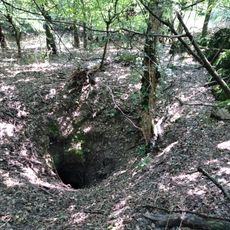
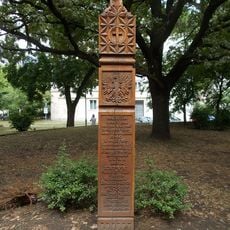
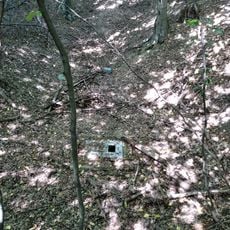
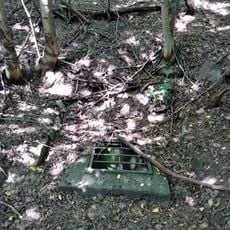
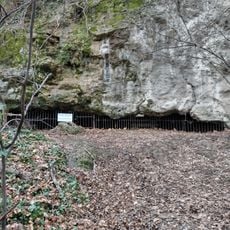
Szőlősi Arany Cave, Natural cave in Vértesszőlős, Hungary.
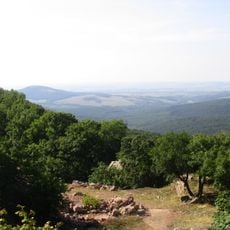
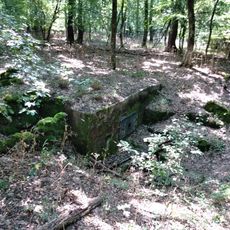
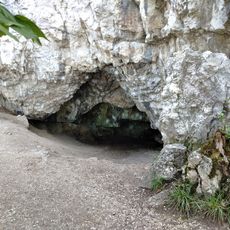
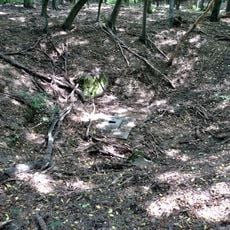
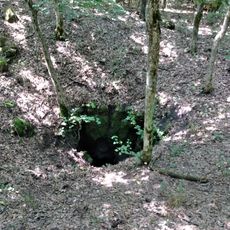
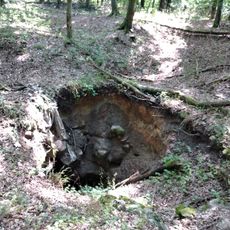
Szőlősi Arany-lyuk opens from the bottom of a doline on the northwestern side of Halyagos-hegy in the upper Farkas-völgy, Vértesszőlős. Its triangular entrance is 0.8 m high and 1 m wide, leading through a short sloping crawl into small chambers, narrow crawls and a 10 m deep shaft. The cave is 70 m long and 14 m deep, formed along north–south and northwest–southeast faults in thick-bedded Triassic limestone.
Fényes Elek described the sinkholes of the Szőlősi and Baji borders in 1848, noting that their rainwater feeds the Tata springs. The name Szőlősi Arany-lyuk first appeared in literature in 1977. In 1978, Lendvay Ákos collected Holocene bone remains from a depth of 5–6 m at the junction of the crawlway and entrance shaft.
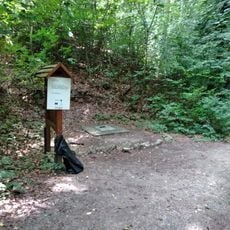
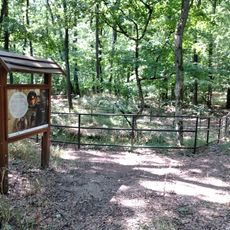
Local tradition holds that great treasures were hidden in the cave during old wars, which is said to explain the name Arany-lyuk, "Golden Hole". The cave also appears in tourist maps under the name Arany-lyuk with a cave symbol, and its entrance lies open beside the red-striped hiking trail.
Expect temperatures between 7 and 10 degrees Celsius inside, so bring warm clothing for comfort. The entrance sits along a marked hiking trail, making it easy to locate and access.
Local tradition holds that great treasures were hidden in the cave during old wars, which is said to give the Arany ("golden") name. In 1977 Dénes Jánossy reported scattered palaeontological finds collected there by Ákos Lendvay, and in 1978 Lendvay gathered Holocene bone remains about 5–6 m down at the junction of the crawlway and entrance shaft.
The community of curious travelers
AroundUs brings together thousands of curated places, local tips, and hidden gems, enriched daily by 94,126 contributors worldwide.