Szelim cave, Natural cave site on Kő-hegy mountain, Tatabánya, Hungary.
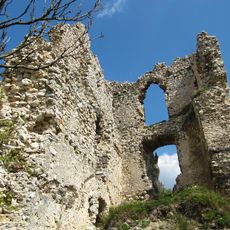
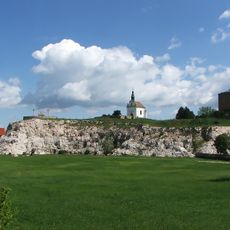
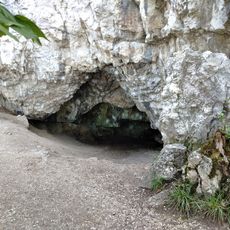
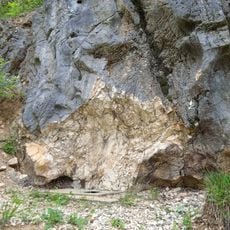
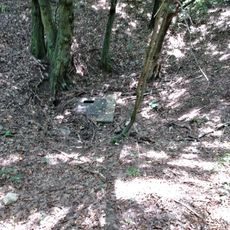
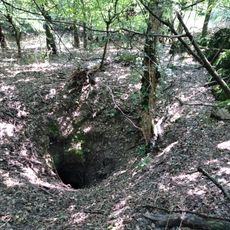
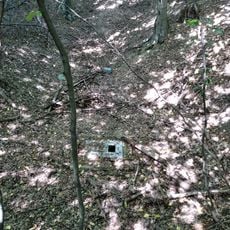
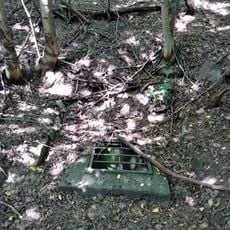
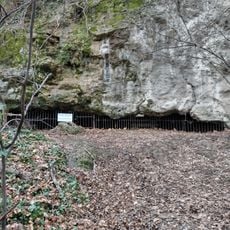
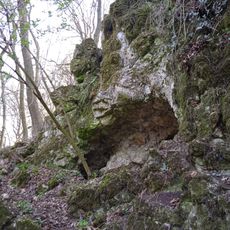
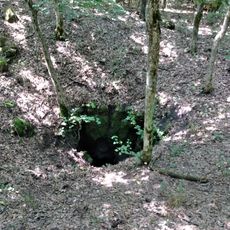
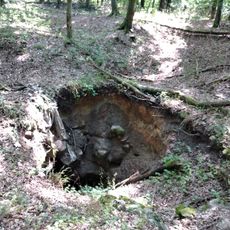
Szelim cave opens on the western cliff face of Kő-hegy at 289 m above sea level, just above Tatabánya. It has four entrances: a 1 m wide, 2 m high northern fissure; a 10 m wide, 7.5 m high western rock gate visible from the city; a 70 cm diameter southern hole; and a 6 m wide, 3 m high arched southwestern entrance. The interior is a 45 m long hall, 25–27 m wide at first and 10–12 m further in, up to 14 m high, with a 7–8 m ceiling opening and visible Triassic Dachstein limestone beds.
Hubert Kessler began excavations in 1932, and István Gaál continued them; the Natural History Research Council funded further work in 1934. Digs yielded hearths, carvings, animal bones and human remains, some from the Turkish wars. Research now dates human presence to about 200,000 years ago, with Mousterian tools in sediments over 12 m deep.
The cave's name has several explanations: it may come from Sultan Selim I, though he died before the Battle of Mohács and never visited Hungary; from a corruption of Süleyman, whose troops passed nearby at Pusztamarót; from the cave's shape resembling a face; or from the Slovak word sedlo (saddle). The name Szelim-lyuk first appears in literature in 1894. Local legends tell of villagers hiding in the cave during the Tatar and Turkish invasions; a spring nearby is called János-forrás after a boy in one story.
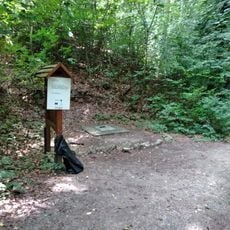
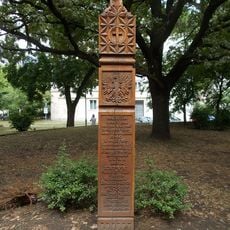
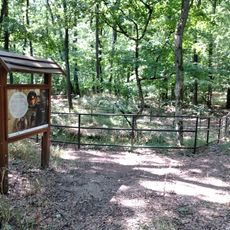
The main entrance is a 10 m wide, 7.5 m high rock gate on the western cliff face of Kő-hegy, visible from the built-up part of Tatabánya. A study trail built a few years ago links it to the Turul monument, 300 m away. The cave is freely accessible without caving gear; three other entrances exist, including a narrow 70 cm hole to the south.
The cave's name has several explanations: it may come from Sultan Selim I, though he died before Mohács and never reached Hungary, or from a corruption of Süleyman, whose troops did pass nearby at Pusztamarót. Slovak linguists link it to the local word szedlim, meaning saddle. The name Szelim-lyuk first appears in literature in 1894.
The community of curious travelers
AroundUs brings together thousands of curated places, local tips, and hidden gems, enriched daily by 92,706 contributors worldwide.