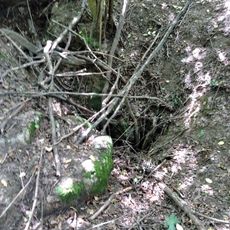
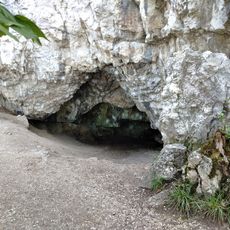
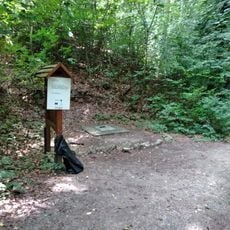
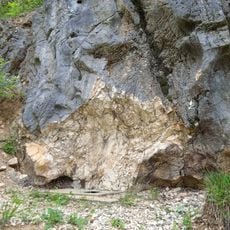
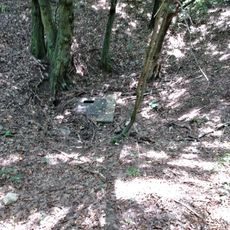
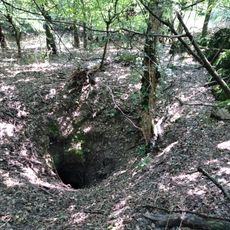
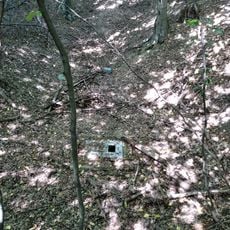
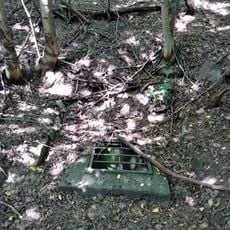
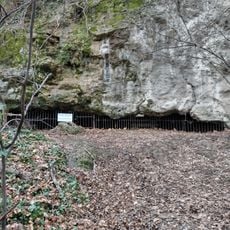
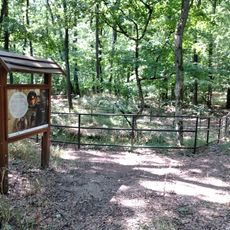
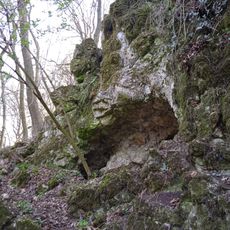
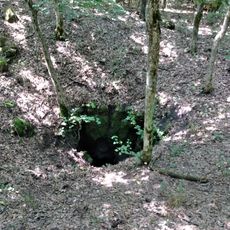
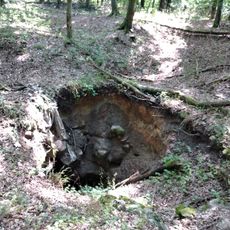
Lengyel Cave, Natural cave in Tatabánya, Hungary.
Lengyel Cave is a natural cave system near Tatabánya formed by water dissolving limestone rock underground. Inside are multiple chambers and passages that developed slowly over thousands of years.
The cave was first explored in 1930 by members of the Pannónia Turista Egyesület; Schőnviszky László and Barbie Lajos reached a depth of 36 m, while the others turned back because of the bad air. In the early 1930s Tasnádi Kubacska András dug in the entrance hall with Polish deportees assisting. Vértes László later found cut marks on a giant deer antler and a herbivore vertebra, which he linked to the Moustier culture.
The name Lengyel, used since 1959, probably refers to Polish displaced persons who helped at the palaeontological excavation in the entrance hall in the early 1930s. Earlier names included Ördög-lyuk (Devil's Hole), Gáz-barlang (Gas Cave) and Mammut-barlang (Mammoth Cave), the last for mammoth bones found in the cavity.
Access to the cave involves walking over uneven ground and requires good footing and balance. Wear sturdy shoes and bring appropriate clothing for changing conditions inside the rock formation.
The cave has also been called Gáz-barlang and Mammut-barlang, after its carbon-dioxide air and the mammoth bones found inside. A wolverine bone from the cave is one of only eight known from Hungarian caves, the others coming from sites such as the Suba-lyuk and Remete-barlang.
The community of curious travelers
AroundUs brings together thousands of curated places, local tips, and hidden gems, enriched daily by 93,721 contributors worldwide.