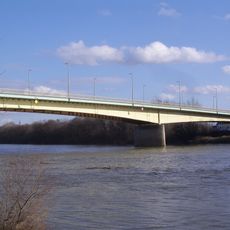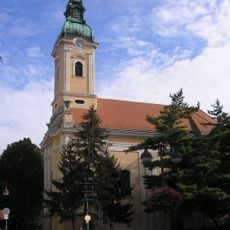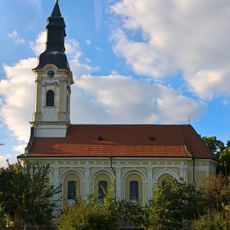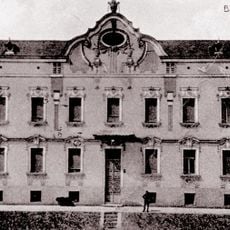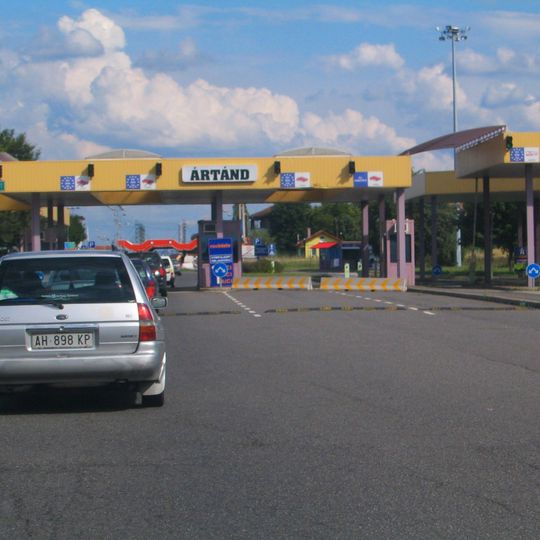
Hungary–Romania border, international border
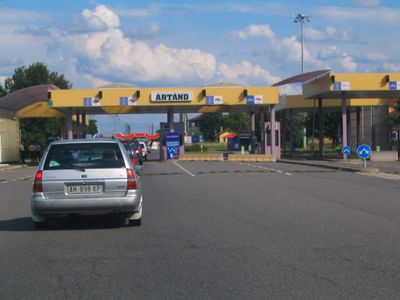
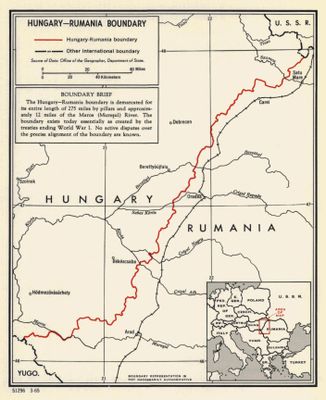
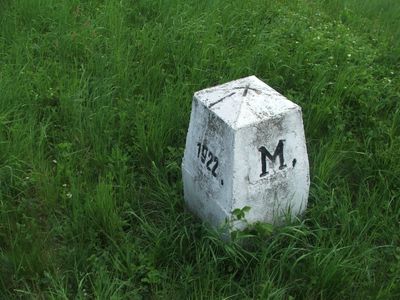
The Hungary-Romania border is an international land boundary running roughly north to south for about 448 kilometers (278 miles), with several official crossing points for travelers and freight. The line passes mostly through the flat Pannonian Basin and is partly defined by the Mures river, with stone markers indicating the exact frontier.
This boundary was drawn in 1920 by the Treaty of Trianon after World War I, which assigned Transylvania to Romania and significantly reduced Hungary's territory. The line was confirmed after World War II and has not moved since.
Near several crossing points, towns on both sides share a Hungarian-speaking population, which gives the region a bilingual character that you notice in street signs and everyday conversations. People cross regularly for shopping or family visits, which makes the border feel more like a meeting point than a dividing line.
Romania joined the Schengen Area for air and sea travel in 2024, but land border checks may still apply depending on the crossing point and travel documents. Choosing a less busy crossing and avoiding peak travel times like weekends and public holidays can save a lot of waiting.
When the border was drawn in 1920, the final line did not always follow the ethnic boundaries that had been proposed, leaving large Hungarian-speaking communities on the Romanian side. This is still visible today in the bilingual place names found in many towns in the border region of Transylvania.
The community of curious travelers
AroundUs brings together thousands of curated places, local tips, and hidden gems, enriched daily by 90,946 contributors worldwide.