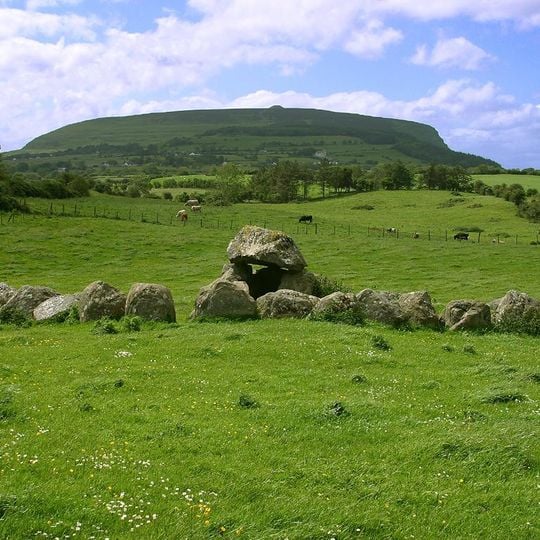
Carrowmore, Archaeological site in County Sligo, Ireland
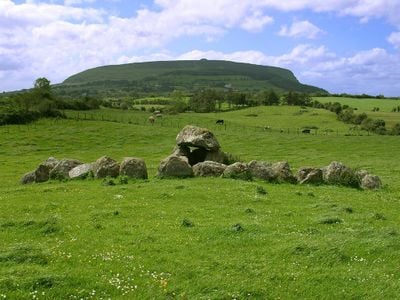
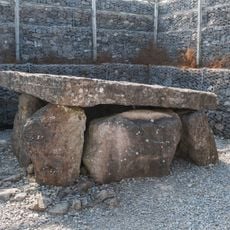
Carrowmore is a group of megalithic monuments on the Coolera Peninsula west of Sligo, with 30 surviving tombs spread over roughly one kilometre north-south and 600 metres east-west. Most are satellite tombs: a central dolmen of five upright stones under a conical capstone, enclosed by a boulder circle of 12 to 15 metres made of gneiss. The largest, Listoghil, is a 34-metre cairn on the plateau's high point.
The site was created during the Neolithic period around 4000 BC when early farming communities stacked large stones to bury their dead. The location was used over thousands of years and documents the burial practices of these ancient societies.
Carrowmore takes its name from the Irish An Cheathrú Mhór, "the great quarter". Visitors can see quartz fragments that accompanied most burials, a material with ritual meaning in the Irish passage tomb tradition. Grave goods found in the tombs include antler and bone pins with mushroom-shaped heads, beads, pendants and stone or clay balls.
The complex stretches about one kilometre north-south and 600 metres east-west on a plateau 36.5 to 59 metres above sea level, so allow time to walk between tombs. A visitor centre on the grounds has opened in summer since 1990. The tombs lie near the access road, and the ground is grass-covered.
The entrance stone of Listoghil, the central cairn, bears markings that may be the only megalithic art found at Carrowmore. Three large boulders lie beside its chamber beneath the cairn, possibly the remains of an earlier passage or an older megalithic structure. The chamber held both unburned bones and cremations.
The community of curious travelers
AroundUs brings together thousands of curated places, local tips, and hidden gems, enriched daily by 93,888 contributors worldwide.