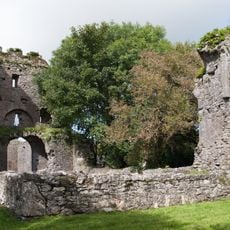
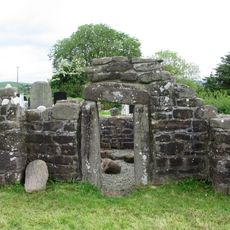
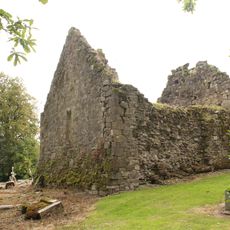
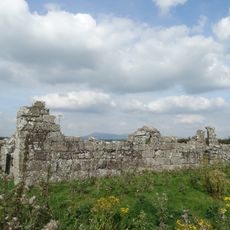
Labbacallee wedge tomb, Megalithic burial monument in Glanworth, Ireland.
Labbacallee is Ireland's largest wedge tomb, a gallery of about 7.75 m set in a wedge-shaped cairn with three capstones, the largest 3.8 m long and weighing 10 tonnes. A vertical slab divides it into a 6.2 m main chamber and a 0.9 m end chamber, closed at the east by five axial end stones.
The monument dates to the Stone Age and was examined through archaeological excavations in 1934, revealing evidence of multiple burials within its chambers. The remains found there trace back roughly 4000 years, documenting ancient burial practices across Ireland.
The Irish name Leaba Chaillí means 'hag's bed', and folklore says a hag associated with the Cailleach lived here. In one tale she chased her husband Mogh Ruith to the River Funshion and killed him with a boulder; she is said to be buried in the tomb. A later story tells of four men digging for treasure who were frightened off by the hag's daughter Aibell in cat form, with fire bursting from her tail.
Labbacallee stands in farmland about 2 km south-east of Glanworth and 8 km north-west of Fermoy, reached by minor roads; the German text's reference to the R512 is unsourced. The monument is a National Monument in State Care (no. 318), so access to the stones is open, but the ground around the chamber can be muddy after rain.
The 1934 excavation found the woman's skull upright in the main chamber, wedged between two skull fragments of a youth, while her body lay in the eastern chamber; one of her leg bones was deformed.
The community of curious travelers
AroundUs brings together thousands of curated places, local tips, and hidden gems, enriched daily by 94,365 contributors worldwide.