Lough Gill, Natural lake in County Sligo, Ireland
Lough Gill is a freshwater lake about 8 km long and 2 km wide, lying mainly in County Sligo with a small part in County Leitrim. The Bonet River enters at the eastern end and the Garavogue drains it west near Sligo Town. Around 20 small islands lie in the lake, including the Isle of Innisfree, and wooded hills such as Slieve Killery and Slieve Daean rise along the south shore.
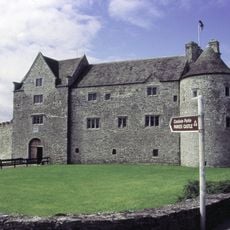
Parke's Castle, a fortified plantation house, was built on the northern shore in the early 17th century by Captain Robert Parke on the site of a tower house of the Uí Ruairc, who ruled the area from about the 7th century until Cromwell. Church Island holds the ruins of a 6th-century abbey founded by Saint Lommán of Trim. Annals record a 1346 battle at Calry-Lough-Gill in which O'Rourke was routed by Rory O'Conor and later killed.
The name Loch Gile means "bright or white lake" in Irish, and the Metrical Dinnsenchus tells that it comes from Gile, daughter of Romra, who drowned in the spring that then rose into a lake. Church Island holds the ruins of a 6th-century abbey founded by Saint Lommán of Trim. Cottage Island, also called Beezie's Island, was inhabited until 1949.
The lake can be explored from several viewpoints and walking paths that run along its edges. Wear sturdy shoes and bring protection against wind and rain, as the weather can shift quickly across the water.
Lough Gill's shores hold the world's northernmost specimens of the Mediterranean strawberry tree (Arbutus unedo), called caithne in Irish. Pollen found at Slish Lake shows it grew here by 100 AD, and in Ireland it can reach 15 metres, taller than a shrub.
The community of curious travelers
AroundUs brings together thousands of curated places, local tips, and hidden gems, enriched daily by 94,460 contributors worldwide.