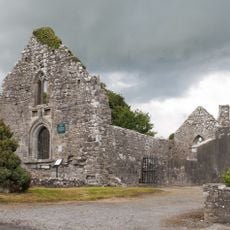
Ballymore Castle, Medieval tower house in Lawrencetown, County Galway, Ireland
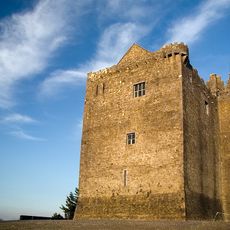
Ballymore Castle is a limestone tower with four stories in County Galway featuring walls roughly 4 feet (1.2 meters) thick. The structure displays defensive elements including narrow windows and loopholes, along with a two-story residential house added during the Georgian era.
John Lawrence acquired the land through marriage to a daughter of O'Madden, Lord of Longford, and built the castle in 1585. His eldest son Walter married Cecily Moore in 1603 and repaired the war-damaged castle, erecting a marble chimney-piece marked W.L. 1620. John Lawrence Jr. was dispossessed by Cromwell in 1641 for backing the royalist cause.
The Lawrences held Ballymore for generations, and the castle's name passed with the estate to the Seymours: Thomas Seymour, who bought the lands around 1824, was married to Matilda Margaret Lawrence. Their son David Thompson Seymour, later Queensland Police Commissioner, was born at the castle in November 1831. A marble chimney-piece bearing the initials W.L. and the date 1620 survives from Walter Lawrence's repairs.
Ballymore Castle stands in Lawrencetown, County Galway, near the shores of Lough Seudy, where Ulick Burke's fort was besieged in June 1691. The tower and its 1815 house are on private land still held by the Noton family, so the site is seen from the surrounding roads rather than entered. The 1620 marble chimney-piece is inside the upper rooms.
Walter Lawrence marked his 1620 repairs with a marble chimney-piece set in an upper room, carved with his initials W.L. and the date. Look for it as the family's own record of rebuilding after the wars. The castle later passed to Sir Thomas Newcomen and, about 1720, to John Eyre of Eyrecourt.
The community of curious travelers
AroundUs brings together thousands of curated places, local tips, and hidden gems, enriched daily by 93,128 contributors worldwide.