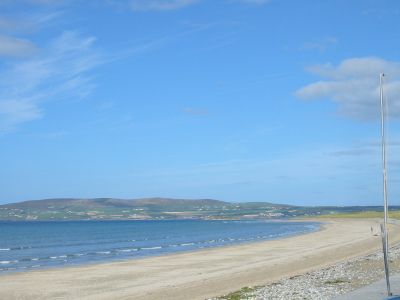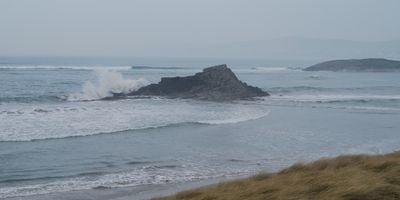
Banna Strand, Atlantic beach in County Kerry, Ireland
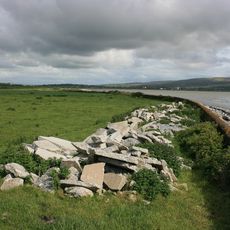
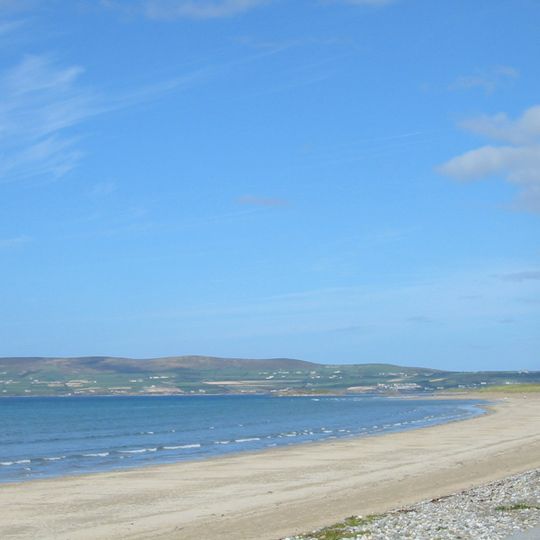
Banna Strand (Trá na Beannaí) is an Atlantic beach in north County Kerry running from Blackrock in the north to Carrahane at its southern edge, about 12 km north-west of Tralee. Shifting sand dunes up to 12 metres high line its whole length, and the mountains of the Dingle Peninsula appear on the south-west horizon. Carrahane lagoon lies at the south end.
On Good Friday, 21 April 1916, Roger Casement came ashore here from a German U-boat, part of an attempt to land arms for Irish Republicans from the vessel Aud; he was captured at Banna Strand. A monument near the dunes names Casement and Robert Monteith but deliberately omits the third man, Daniel Julian Bailey, who turned King's evidence. It was erected in 1966 for the landing's 50th anniversary, and Florrie Monteith, Robert's daughter, turned the first sod.
The Irish name Trá na Beannaí refers to the peaks or gables, echoed in the strand's Irish name. On warm summer days many residents of Tralee travel out to Banna for a day at the beach. Carrahane lagoon at the southern end is known for migrating birds.
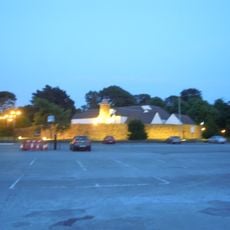
The car park was moved from behind the dunes onto the beach itself in the 1990s. The strand lies about 12 km north-west of Tralee, and the Dingle Peninsula mountains show on the south-west horizon. Carrahane lagoon sits at the southern end, where migrating birds gather.
Carrahane lagoon at the southern end of the strand is known for migrating birds. The monument near the dunes, erected in 1966 for the 50th anniversary of the landing, leaves out the name of the "third man", Daniel Julian Bailey, because he turned King's evidence after capture.
The community of curious travelers
AroundUs brings together thousands of curated places, local tips, and hidden gems, enriched daily by 93,607 contributors worldwide.