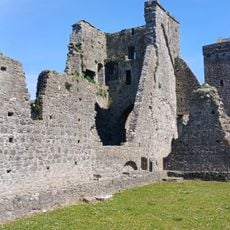
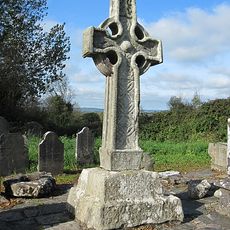
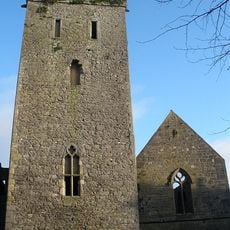
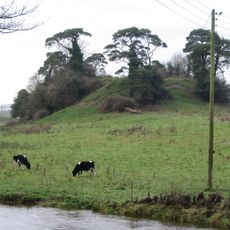
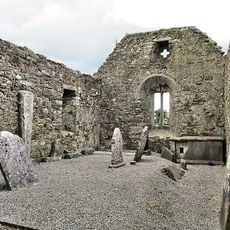
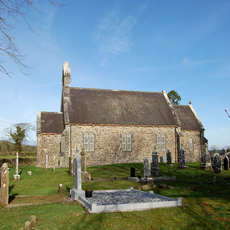
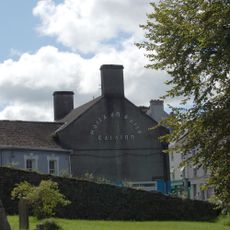
Callan Augustinian Friary, Augustinian friary ruins in Callan, County Kilkenny, Ireland.
Callan Augustinian Friary is a Gothic friary ruin near Callan beside the Kings River. The rectangular church structure features a central bell tower and soaring Gothic windows, along with one of Ireland's most intricately carved sedilia, the stone seats for priests set into the south wall.
Edmund MacRichard Butler petitioned Pope Pius II in 1461 to found the friary; after Edmund died in 1462, his son James Butler erected the buildings and is regarded as the founder. The foundation date is usually given as 1471, though it was likely 1468 or 1469. In 1472 the community became observant, and in 1479 the friary became the centre of the Irish Observant Congregation. It was dissolved and its lands confiscated under Henry VIII in 1540.
The friary served as headquarters for a reform movement starting in 1479 that pushed monks to follow stricter rules. This religious shift had deep roots in the local community and shaped how people practiced their faith.
The site is freely accessible and located within easy walking distance of Callan town. Visitors can explore the stone remains at their own pace without needing a guide or prior arrangement.
The holy well at the southern end of Abbey Meadow is recorded as a monument (KK026-010018-) and holds a limestone gutter-spout that may have belonged to the friary. Local folklore held its water a cure for swellings and strains, and the Callan-born poet John Locke wrote of it in his 1885 poem "The Old Abbey Well".
The community of curious travelers
AroundUs brings together thousands of curated places, local tips, and hidden gems, enriched daily by 94,227 contributors worldwide.