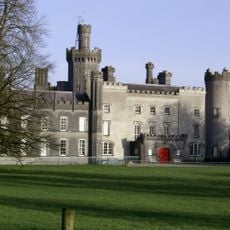
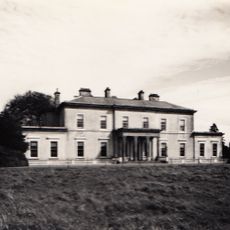
Knockdrin Castle, Gothic Revival castle in Mullingar, Ireland.
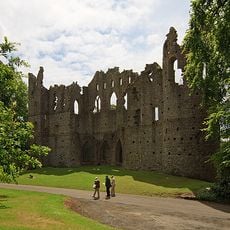
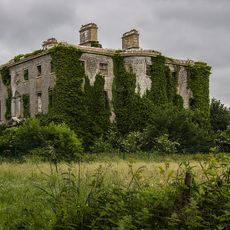
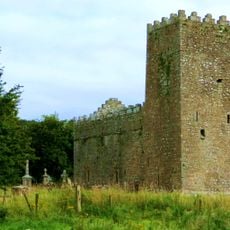
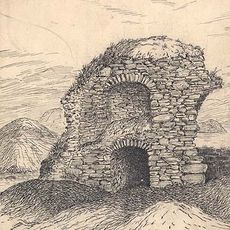
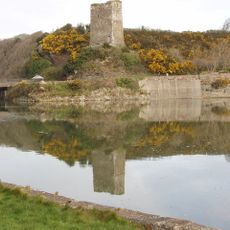
Knockdrin Castle is a neo-Gothic country house 5.6 km northeast of Mullingar, County Westmeath, built for Sir Richard Levinge, 6th Baronet, and probably finished by 1820. The National Inventory credits the plan to James Shiel, assistant to Francis Johnston, though elements of the facade are attributed to Richard Morrison. Its outbuildings incorporate the remains of a late medieval tower house built around 1550.
The Levinges, a Williamite family, acquired the Knockdrin estate from the Tuites; the first Sir Richard Levinge (1656–1724), Chief Justice of the Common Pleas, built High Park there in the early 18th century. His descendant Sir Richard Levinge, 6th Baronet (1785–1848), replaced it with the present castle, probably completed by 1820. The design is credited to James Shiel, assistant to Francis Johnston, though Richard Morrison submitted rejected plans.
The townland's Irish name, Muine Liath ('grey thicket'), is anglicised as Monilea, while Knockdrin comes from Cnoc Droinne, 'hill of Drin', echoed by the small lake Lough Drin on the estate. The area is also the home of the Westmeath Hunt, and the R394 Mullingar to Castlepollard road runs through it.
The estate covers about 1,000 acres (4.0 km²), down from over 12,000 acres (49 km²) when the Levinges bought it. The castle stands 5.6 km northeast of Mullingar, and the R394 Mullingar–Castlepollard road runs through the area. The castle is a private residence, so the grounds and outbuildings are not open to visitors.
Winston Churchill stayed at Knockdrin Castle during the Irish War of Independence, in a bedroom now called the Crown Bedroom. The Levinges had owned the estate since the first Sir Richard Levinge, Chief Justice of the Common Pleas, bought it from the Tuites.
The community of curious travelers
AroundUs brings together thousands of curated places, local tips, and hidden gems, enriched daily by 93,907 contributors worldwide.