Cregg Mill, Flour mill in County Galway, Ireland.
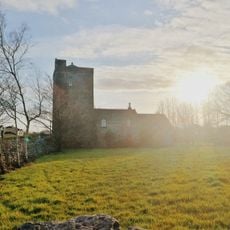
Cregg Mill is a four-storey watermill of limestone, with an ashlar façade and coursed stone elsewhere, standing by the Cregg River near Corrandulla. Its round-headed attic windows and doorcase resemble a country house; the NIAH calls the ashlar façade a rarity. Converted in the late 1970s to concrete floors, it now holds the mill, the former miller's cottage and an apartment.
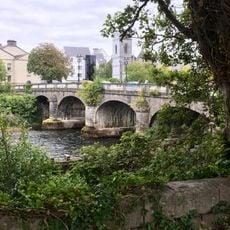
The mill was built between 1760 and 1800 as one of three watermills at the Cregg River bridge. During the Great Famine it became a distribution point for grain and food to those in need.
The mill's name appears in the 1919 co-operative Harward Wade, Son and Co., Ltd., which restarted milling on 17 October 1919 to serve local farmers. It produced oatmeal and wholemeal, not flour, using French burr stones, Irish shelling stones and a tiled kiln for drying oats.
The mill sits about 14 kilometers from Galway City and is accessible by road through rural countryside. It can be visited throughout the year, and the grounds around the building are walkable.
The building was originally known as Drumgriffin Mill and processed wheat, rye, oats, and barley using traditional methods. Grain was dried in kilns as a key step before being ground into flour.
The community of curious travelers
AroundUs brings together thousands of curated places, local tips, and hidden gems, enriched daily by 92,775 contributors worldwide.