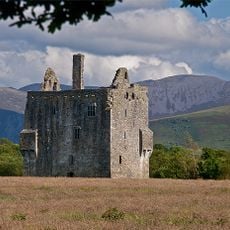
Parkavonear Castle, Norman castle ruins in Aghadoe, Ireland.
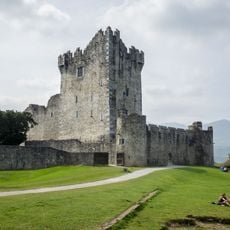
Parkavonear Castle is a two-storey 13th-century Anglo-Norman ruin in Aghadoe, built to a cylindrical plan unusual for Norman tower houses. Its walls are two metres thick, with a staircase inside the wall linking the floors. Only the stonework survives; the wooden floors and roof are gone, and traces of the square earthworks that once surrounded the keep remain.
The castle was built in the 13th century following the Anglo-Norman invasion of 1169, constructed as a defensive stronghold to control the local territory. It represents one of many fortifications that these settlers established across Ireland during this period of expansion.
The name derives from the Irish 'paírc an mhóinéir', meaning 'field of the meadow'. Locals spell it with the middle 'a', though 'Parkvonear' sometimes appears. The Irish form is Caisleán Pháirc an Mhóinéir.
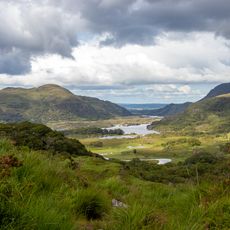
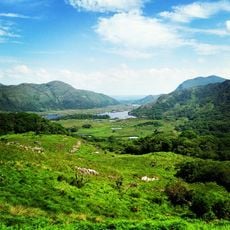
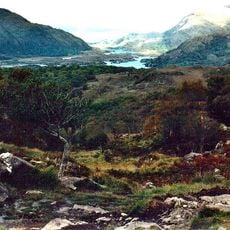
The ruin stands in the townland of Aghadoe, County Kerry, on ground overlooking the lakes of Killarney. Only the stone shell survives, with no wooden floors or roof, and the surrounding earthworks are reduced to traces. The interior is reached through an opening made into the lower floor.
This castle stands out among Norman fortifications for its rare circular design, while most castles of that era followed rectangular or square patterns. This unusual shape reflects practical choices the builders made when defending this particular location.
The community of curious travelers
AroundUs brings together thousands of curated places, local tips, and hidden gems, enriched daily by 92,639 contributors worldwide.