National Museum of Ireland – Archaeology, Archaeological museum in Dublin, Ireland
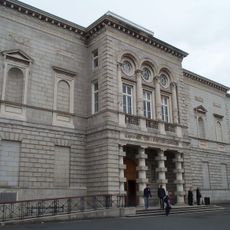
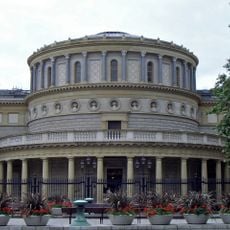
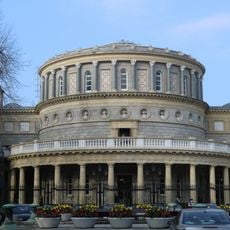
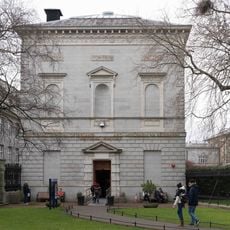
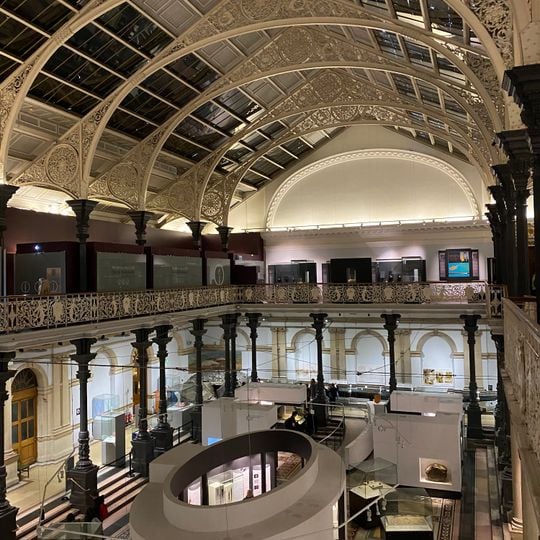
The National Museum of Ireland – Archaeology occupies a Victorian Palladian building on Kildare Street, designed by Thomas Newenham Deane and his son Thomas Manly Deane and opened in 1890. Its entrance columns and domed rotunda are of Irish marble, the exterior is mostly Leinster granite, and the interior mosaic floors depict scenes from classical mythology.
The museum was created by the Dublin Science and Art Museum Act 1877, which merged the collections of the Royal Irish Academy and the Royal Dublin Society. The building on Kildare Street, designed by Thomas Newenham Deane and his son Thomas Manly Deane, opened on 29 August 1890. It was renamed the National Museum of Science and Art in 1908 and the National Museum of Ireland in 1921.
The museum displays medieval treasures like the Ardagh Chalice and Tara Brooch alongside prehistoric gold ornaments that reflect the craftsmanship of earlier Irish societies. These pieces show what communities valued and created across different periods of Irish history.
Entry is free and the location on Kildare Street is well-served by public transport. Allow several hours to walk through all four floors at a comfortable pace without rushing through the galleries.
The museum displays an Egyptian mummy named Tentdinebu alongside preserved bodies recovered from Irish bogs. This unusual pairing brings together distant civilizations with local discoveries, creating a surprising contrast within the same space.
The community of curious travelers
AroundUs brings together thousands of curated places, local tips, and hidden gems, enriched daily by 92,639 contributors worldwide.