Kindlestown Castle, Medieval castle in Delgany, Ireland
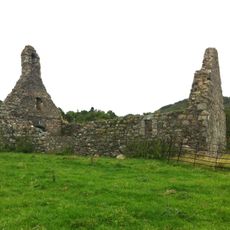
Kindlestown Castle is a ruined hall house of rough limestone measuring 21 by 9.8 metres externally and standing 8 metres high, with walls 1.5 metres thick. The northern wall and part of the eastern wall survive to parapet level, while the southern and western walls were demolished after the medieval period. A small projecting tower sits in the north-west corner, and the eastern wall holds the ground-floor entrance and a mural staircase.
The castle was built in the late 13th century by Albert de Kenley following his marriage to Joan, widow of a local ruler. The structure emerged as part of the Anglo-Norman push to establish control over Irish territories during this period.
The name comes from Albert de Kenley, Sheriff of Kildare in 1301, who is credited with building it; others link it to Walter de Bendeville around 1225. In 1621 an inquisition of James I recorded 400 acres of land and a water mill attached to the castle. The Irish name is Caisleán Bhaile an Chinligh.
The ruin sits on a hillside west of Greystones and is surrounded by open ground that allows visiting at any time. The terrain can become slippery after rain, so appropriate footwear and caution are recommended.
In 1621, an inquisition of James I recorded that the castle stood amid 400 acres (160 ha) of land and had its own water mill. The O'Byrnes burned nearby Rathdown Castle in 1301, and its occupants may have taken refuge here.
The community of curious travelers
AroundUs brings together thousands of curated places, local tips, and hidden gems, enriched daily by 94,487 contributors worldwide.