St. Mochta's House, Medieval oratory in Louth Village, Ireland.
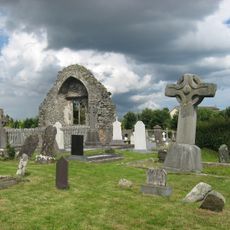
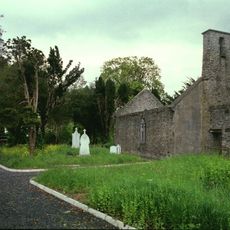
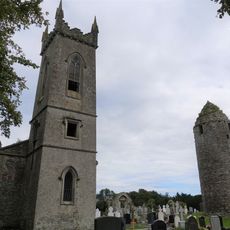
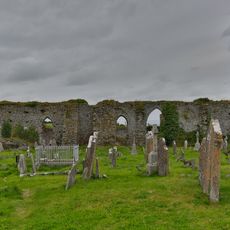
St. Mochta's House is a rectangular stone oratory with a barrel-vaulted roof and a small upper chamber reached by an internal stair. It stands northwest of Louth village beside the ruined 13th-century church of St. Mary's Priory. The oratory is believed to date from the second half of the 12th century, though some sources place it earlier, in the 9th–11th centuries.
Mochta, a disciple of Saint Patrick who died around 535, founded a monastery at Louth village around 528; no remains of it survive. The oratory called St. Mochta's House is dated to the second half of the 12th century, though some sources place it in the 9th–11th centuries. A wall around the site was built in 1906 by Louth County Council, and the Office of Public Works carried out conservation work in 1934.
The name recalls Mochta, a disciple of Saint Patrick who founded a monastery at Louth around 528. The Annals of Connacht record that in 1242 the Archbishop of Armagh and the abbots of Ireland held a chapter at Louth to honour the order, when relics Mochta had gathered in Rome were raised. Similar saint's-house buildings, such as St. Columb's House at Kells, were held to contain the founder's grave or relics.
The building stands northwest of Louth Village and is easy to locate since it sits beside the ruins of St Mary's Priory. Visitors should wear sturdy shoes as the ground can be rough and uneven in places around the site.
The building belongs to a rare group of medieval structures that still retain their original stone roofs, a construction method seldom preserved elsewhere in Ireland. This intact feature makes it valuable for understanding how craftspeople worked during that period.
The community of curious travelers
AroundUs brings together thousands of curated places, local tips, and hidden gems, enriched daily by 92,875 contributors worldwide.