Clochafarmore, Bronze Age standing stone near Knockbridge, Ireland
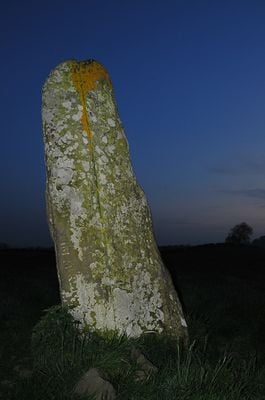
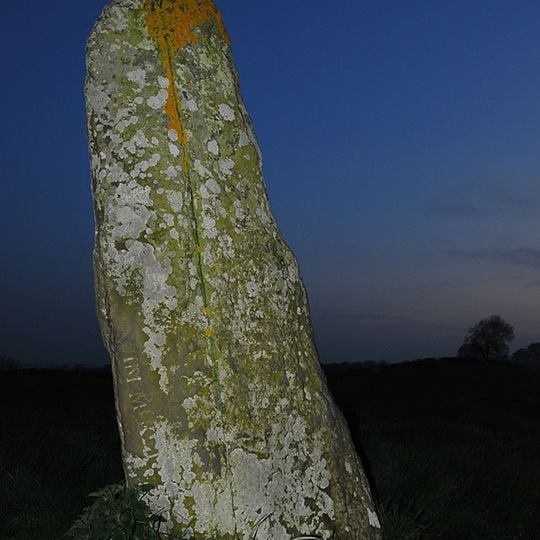
Clochafarmore is a standing stone from the Bronze Age set on the bank of the River Fane in County Louth, in the northeast of Ireland. The stone rises clearly above the flat farmland around it and can be seen from a distance across the open fields.
The stone was put in place during the Bronze Age, a period when this part of northeast Ireland was an active area for communities who left behind monuments and objects across the landscape. It has stood in the same spot ever since, surviving both the passing of time and the changes to the land around it.
The stone is locally known as the burial place of Cú Chulainn, the great warrior of Irish mythology, who is said to have tied himself to it so he could die standing up. Visitors today can see the stone rising alone in the open field, a quiet but powerful reminder of how deeply old stories are woven into the Irish countryside.
The stone stands on open farmland and can be reached on foot without special equipment, though the ground can be wet or muddy depending on the season. There are no facilities on site, so wearing sturdy footwear and visiting in dry weather makes the trip more comfortable.
A bronze spearhead found near the stone in the 1920s suggested that this spot was connected to combat or ritual activity long before any written record of it existed. The find added a layer to the story of the stone that goes beyond its role as a simple marker in the landscape.
The community of curious travelers
AroundUs brings together thousands of curated places, local tips, and hidden gems, enriched daily by 91,809 contributors worldwide.