Calvary, Sacred hill in Jerusalem, Israel
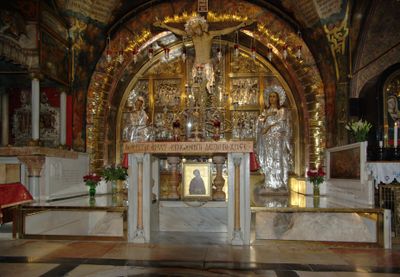
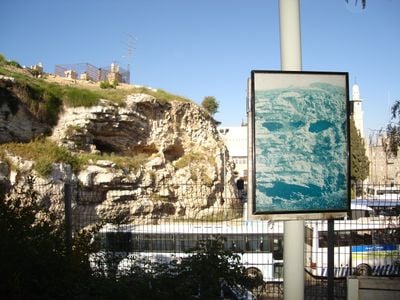
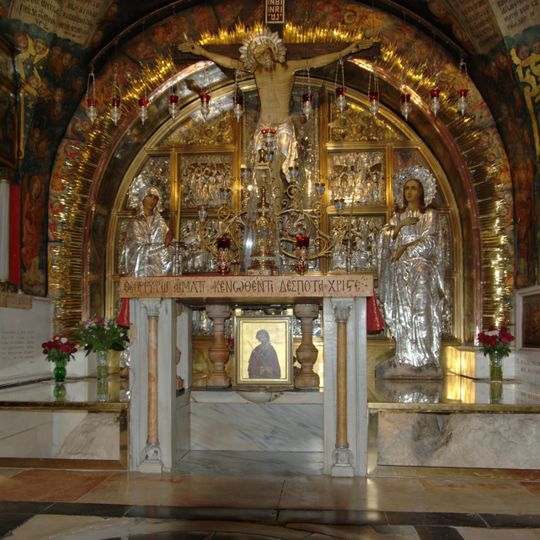
Calvary, also called Golgotha, is a rock outcrop within the Church of the Holy Sepulchre in Jerusalem. The exposed cream-coloured limestone is flanked by a chapel with marble columns, and above the altar a gold-covered crucifixion scene shows Christ on a dark cross with the sign INBI and a beam inscribed ΘΕΟΥΡΓΩ ΑΙΜΑΤΙ ΚΕΝΩΘΕΝΤΙ ΔΕΣΠΟΤΑ ΧΡΙΣΤΕ. Rows of red-glass lamps hang on chains above.
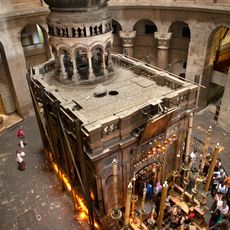
Helena, mother of Emperor Constantine, identified this location in 325, leading to the construction of the first Church of the Holy Sepulchre. Later conquests, fires and reconstructions changed the surrounding structure, while the rock itself remained unaltered.
The name Calvary comes from the Latin Calvariae Locus, "place of the skull", a rendering of the Greek Kraníou Tópos used in the Gospels. A chapel inside the rock is dedicated to Adam, whose skull tradition places at the foot of the cross, which is why a skull often appears beneath crucifixions. Spanish keeps the phrase "vivir un calvario" for an ordeal.
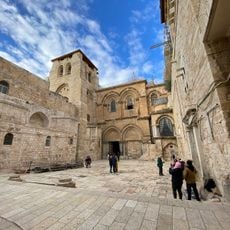
The chapel of Calvary is reached by a steep stone staircase inside the Church of the Holy Sepulchre, beginning to the right of the main entrance. Greek Orthodox clergy keep the space, which fills quickly on weekends and religious holidays; the rock is exposed on both sides of the altar.
A silver disc beneath the altar marks the point where tradition says the cross stood. A clearly visible natural crack runs through the rock formation and can be seen from both sides of the chapel.
The community of curious travelers
AroundUs brings together thousands of curated places, local tips, and hidden gems, enriched daily by 92,323 contributors worldwide.