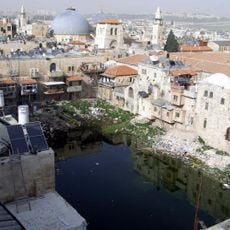
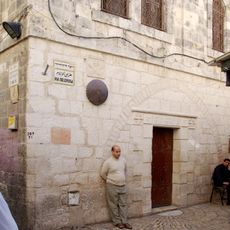
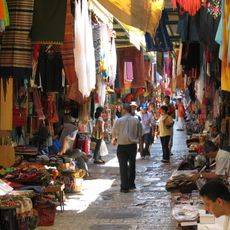
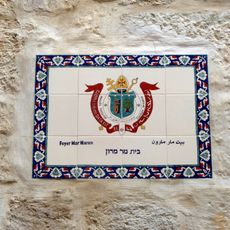
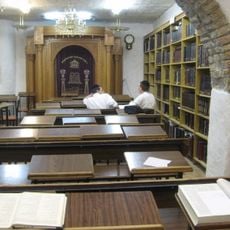
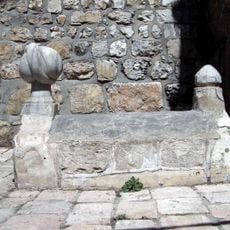
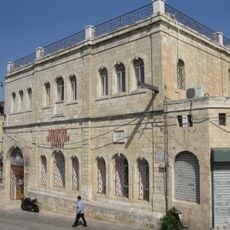
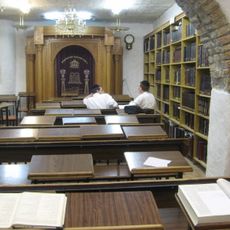
Al-Khanqah al-Salahiyya Mosque, Ottoman mosque in Christian Quarter, Jerusalem, Palestine.
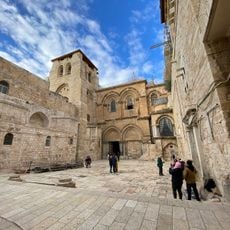
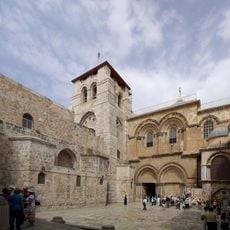
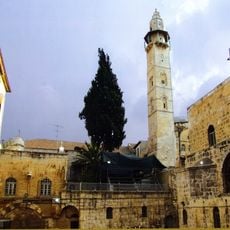
Al-Khanqah al-Salahiyya is a mosque in Jerusalem's Christian Quarter featuring a central courtyard, prayer halls, and a 15th-century minaret situated north of the Church of the Holy Sepulchre. Originally designed as a retreat for Sufi practice, the complex today houses prayer spaces alongside school rooms and residential chambers.
The building occupies the former palace of the Latin Patriarch of Jerusalem. After Saladin took the city in 1187, it became al-Khanqah al-Salahiyya, and in 585 AH/1189 he endowed it for the Sufis, making it the first khanqah established in Jerusalem after its capture. Its minaret was built in 840 AH/1417 under the Mamluk sheikh Burhan al-Din ibn Ghanim.
The khanqah was the first established in Jerusalem after its capture in 1187, endowed by Saladin as a waqf for Sufis in 1189. Its sheikhdom was a prestigious post held by senior scholars, and the complex housed a mosque, school, public sitting room, dining hall and military training facilities. A marble plaque on the upper prayer hall names its founder, Isa ibn Ahmad ibn Ghanim, and the year 1340.
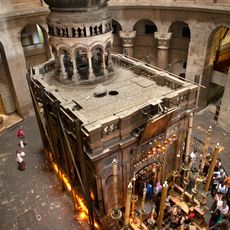
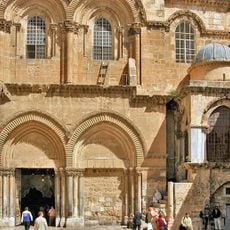
The site is located near the Church of the Holy Sepulchre in Jerusalem's narrow Christian Quarter, so it is best reached on foot. Access may be limited during prayer times, so visitors should plan ahead and check opening hours before arriving.
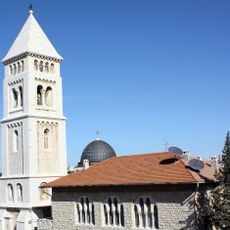
The minaret, built in 1417 under Mamluk rule by Sheikh Burhan al-Din ibn Ghanem, is almost identical to the minaret of the Mosque of Omar across the Church of the Holy Sepulchre. A line joining the two minarets passes through the door of the Tomb of Jesus, and their tops sit at the same elevation despite different ground levels.
The community of curious travelers
AroundUs brings together thousands of curated places, local tips, and hidden gems, enriched daily by 93,112 contributors worldwide.