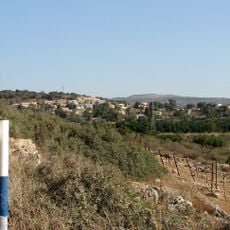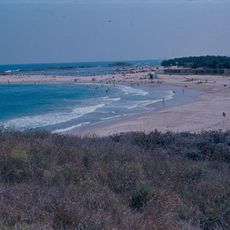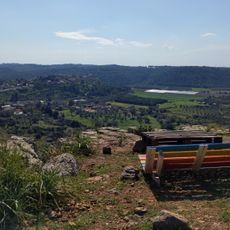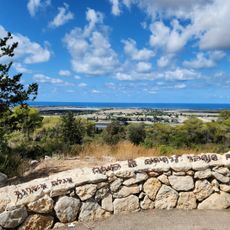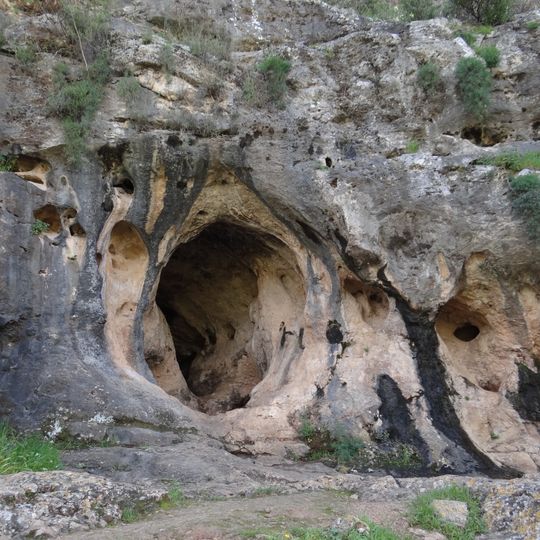
Skhul Cave, Archaeological site in Nahal Me'arot Nature Reserve, Israel.
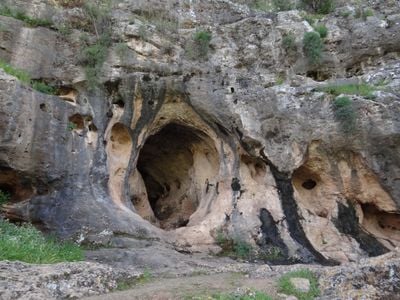
Skhul Cave is an archaeological site and nature reserve on the Mediterranean coast of Israel, set into the limestone cliffs of Mount Carmel in the Haifa District. It is a rock shelter with several chambers where excavations uncovered human skeletons, stone tools, and animal bones.
Excavations started in 1929 under archaeologist Dorothy Garrod, who uncovered human skeletons estimated to be over 100,000 years old. This discovery placed the site among the most important prehistoric locations in the Middle East.
The cave's name comes from the Arabic word al-Skhool, meaning young goat. Visitors can see how the rock shelter was used not just for daily life but also as a burial place, which makes it one of the oldest known cemeteries in the region.
The cave is reached through the Nahal Me'arot Nature Reserve, which has marked trails and information boards about the finds. Sturdy footwear is a good idea, as the rock surfaces inside can be uneven.
Some of the skeletons found at Skhul were buried with objects such as boar jaws and shell ornaments, suggesting deliberate burial rituals. This is one of the earliest known examples of symbolic behavior in our species.
The community of curious travelers
AroundUs brings together thousands of curated places, local tips, and hidden gems, enriched daily by 90,904 contributors worldwide.