Laura of Euthymius, Monastery in the Judean Desert, West Bank, Palestine
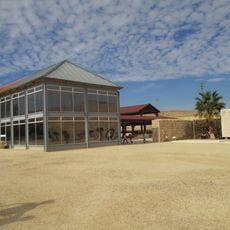
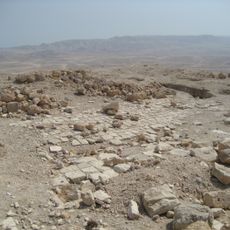
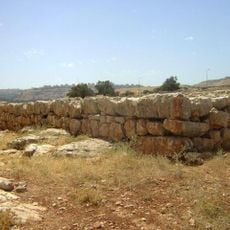
The Laura of Euthymius is a walled monastic ruin measuring 65 by 54 metres, with a three-aisled basilica (13.8 by 25.4 metres) in the southeast that preserves remains of a mosaic floor. At its centre lies the crypt with the tomb of Euthymius and his companions, a vaulted chamber 4.7 by 5.8 metres. About 15 metres east of the wall stands a cistern 23 by 12 by 15 metres holding 4,140 cubic metres of water.
Euthymius of Melitene founded the laura in 428; after his death in 473 it became a communal monastery, and Martyrius, patriarch of Jerusalem, consecrated its church on 7 May 484. Damaged by an earthquake in 659, it was rebuilt and survived until 1187, when Saladin's conquest ended monastic life. Around 1289 Baibars turned the site into a caravanserai for pilgrims to Nabi Musa.
The monastery reflects an early form of Christian monastic life where monks initially lived in isolated cells before later gathering in communal structures. This shift shows how religious communities organized themselves differently as their practices evolved over time.
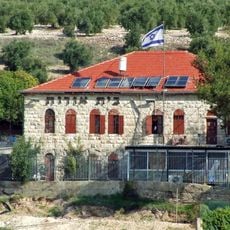
The site lies in the industrial zone of Ma'ale Adummim, about 14 km east of Jerusalem. It was closed to the public until 2010, when it passed to the Israel Nature and Parks Authority. Visits are only possible for groups with advance coordination through the Good Samaritan Museum.
Around 1289, under Sultan Baibars, the monastery was converted into a caravanserai called Khan al-Ahmar, offering lodging to Muslim pilgrims traveling to Nabi Musa. The name means "Red Caravanserai." The large cistern east of the walls, holding 4,140 cubic meters, was still used by a local Bedouin tribe when rediscovered centuries later.
The community of curious travelers
AroundUs brings together thousands of curated places, local tips, and hidden gems, enriched daily by 93,001 contributors worldwide.