Samara Ruins, Archaeological ruins in Heffer Valley, Israel
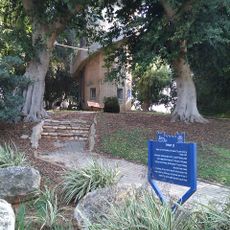
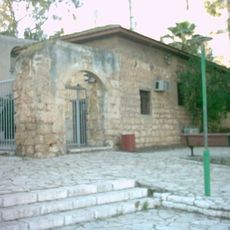
Samara Ruins (Khirbat Samara) is a rectangular stone building of three connected rooms on a hill 15 m above sea level, north of Nahal Alexander and Havatzelet HaSharon. Three external arches anchor its walls to the kurkar rock. It was built in the late 19th century by Abdallah Samara of Tulkarm as an observation point over his lands.
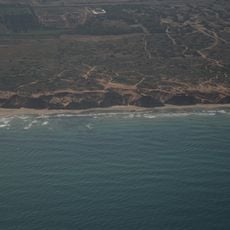
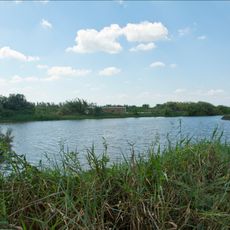
The building was erected in the late 19th century by Abdallah Samara, a Tul-Karem resident who owned land in the area and used it as an observation point over his fields. The Ottoman authorities later turned it into a customs station for the watermelons grown in Hefer Valley and exported across the empire. The watermelons travelled along the river by camel or on rafts to the port of Minat Abu Zabura, on today's Mikhmoret shore.
The name Samara belongs to the family that built the structure, descendants of Samaritans who converted to Islam. The building later served the Ottoman authorities as a customs post for watermelons grown in Hefer Valley and shipped down the river to Mina Abu Zabura, today's Mikhmoret beach.
The site is accessible on foot but requires sturdy footwear due to uneven terrain and scattered stones. Bring water and sun protection, and plan your visit during daylight hours when pathways are easier to navigate safely.
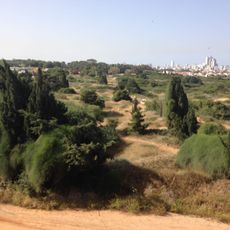
Southwest of the building, excavations uncovered a late Roman farm with a mosaic floor and Byzantine-period winepresses, plus burial caves cut into the kurkar rock. The Israel Trail and Sharon Trail, running along Nahal Alexander, climb up to the structure.
The community of curious travelers
AroundUs brings together thousands of curated places, local tips, and hidden gems, enriched daily by 94,418 contributors worldwide.