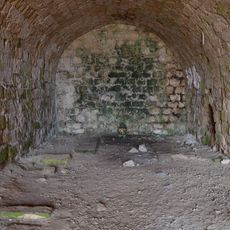
Feinberg House, Historical museum in Hadera, Israel
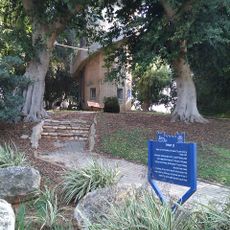
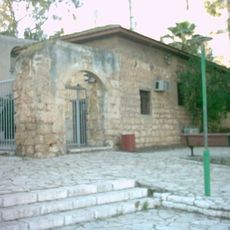
The Feinberg House is a museum in Hadera dedicated to the life and work of Avshalom Feinberg, displaying photographs, documents, and personal belongings. The building itself dates to 1898 and shows the structure of an early settler home with preserved original rooms.
Israel (Lulik) Feinberg began building the house in 1895 or 1896, one of Hadera's first structures; its kurkar core first served as a cowshed or stable because Ottoman building permits were hard to obtain. The family moved in from Jaffa in 1898 but soon returned after all fell ill with fever. Dov Feinberg, Israel's brother in Russia, largely financed the house and the land purchases. From 1906 the wings around the inner courtyard were added. On 6 May 1921 rioters from Tulkarm looted and burned the house during the 1921 riots.
The Feinberg family were known as lovers of fine things, shown in the furniture, household objects and wall paintings in Art Deco and Art Nouveau style. In the inner courtyard, mother Pnina Feinberg grew roses and irises; when Baron Edmond de Rothschild visited in 1914 she gave him a bouquet and iris bulbs. The dining room now shows a documentary on the house's restoration, and a café operates in the courtyard.
The house stands at 34 Jabotinsky Street, with the rooms arranged around a courtyard shaped like the letter ח; the dining room shows a documentary on the building's restoration. The courtyard café operates beside a sapling grown from the palm at Avshalom Feinberg's fall site near Rafah. The museum opened in 2008, so check current opening hours before arriving.
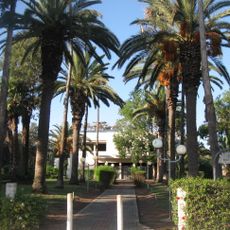
In the inner courtyard grows a sapling from the date palm at Avshalom Feinberg's fall site near Rafah, where his remains were found in 1967 with a seed in his pocket. The tree ties the museum to his death in the Sinai desert during World War I.
The community of curious travelers
AroundUs brings together thousands of curated places, local tips, and hidden gems, enriched daily by 94,121 contributors worldwide.