Birds Mosaic, Byzantine mosaic floor in Caesarea Maritima, Israel
The Birds Mosaic is a rectangular floor of small stone tesserae measuring 16 by 14.5 metres, set in a Byzantine palace at Caesarea Maritima. Its central field holds 120 round medallions of large birds, all facing left, arranged in 12 rows so that the same species repeats along diagonals. A border of fruit trees and moving mammals frames the medallions.
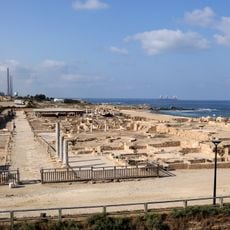
The mosaic belonged to a Byzantine palace built at the end of the 6th or beginning of the 7th century, outside the walls of ancient Caesarea. It covered the palace's central courtyard, which a portico on the west side led into. The building burned, apparently during the Arab conquest of 640; the wooden beams of its upper storey collapsed onto the mosaic floor below.
The mosaic takes its name from the 120 round medallions of birds in its central field. The species shown include peacocks, storks, pelicans, herons, pheasants, the grey-headed swamphen, ducks, flamingos, guineafowl, ostriches and rock partridges, all facing left. Each row begins with the second bird of the row below, so the same species repeats along diagonals.
Allow time to closely observe the details of the medallions and decorative elements scattered across the surface. The site is accessible to visitors and it makes sense to visit during cooler parts of the day for comfortable walking.
A D-shaped tabletop of gold glass — two layers of glass enclosing a gold leaf with crosses and flowers — was found fallen face-down on this floor. The wooden table burned in the fire of about 640, leaving the top intact; it was removed for conservation and is not displayed on site.
The community of curious travelers
AroundUs brings together thousands of curated places, local tips, and hidden gems, enriched daily by 92,635 contributors worldwide.