Caesarea Maritima, Roman archaeological site in Caesarea, Israel.
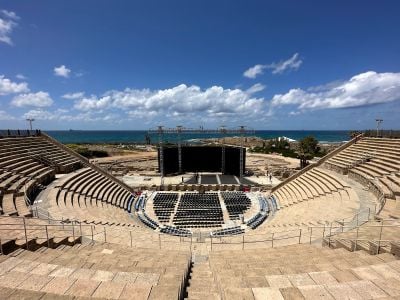
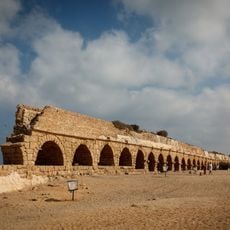
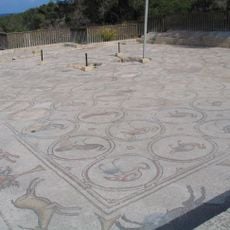
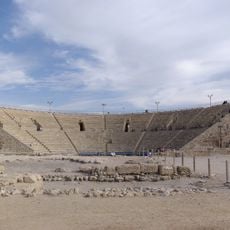
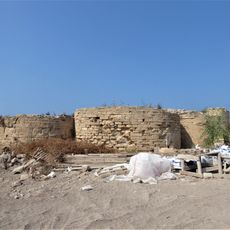
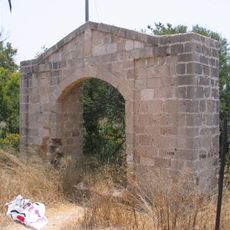
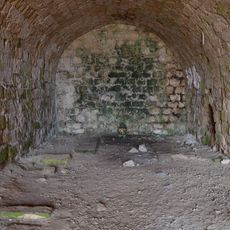
Caesarea Maritima is a Roman archaeological site on the Mediterranean coast with a theater, hippodrome, aqueducts, and fortified walls from different periods. The ruins spread across a large area with many partially restored stone structures.
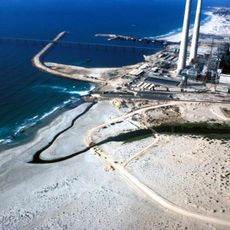
A Phoenician trading station called Straton's Tower, founded in the 4th century BCE, stood here until Alexander Jannaeus captured it in 90 BCE. Herod began building Caesarea around 22 BCE and dedicated it to Augustus in 10/9 BCE, with the Sebastos harbour enclosed by breakwaters of pozzolana concrete. It became the Roman administrative capital of Judaea in 6 CE, was conquered by the Muslims in 639 and by Baldwin I in 1101, refortified by Louis IX around 1250, and slighted by Sultan Baibars in 1265.
The name Caesarea honoured Caesar Augustus, while sebastos, Greek for augustus, named the harbour Sebastos. Herod's city hosted sports contests, gladiator games and theatre every five years. In the Byzantine period Origen compiled the Hexapla here and Eusebius wrote his church history and the Onomasticon.
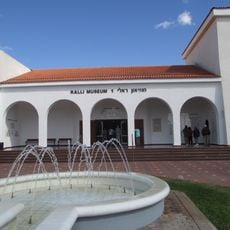
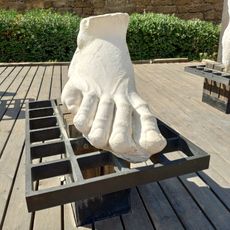
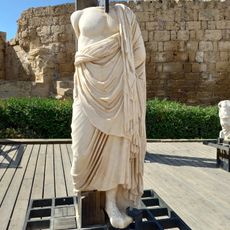
The national park offers guided tours through the ancient ruins with informational signs in multiple languages and access to restored architectural elements. Wear comfortable shoes since the ground is uneven and you will walk a lot.
Engineers built an artificial harbor using underwater concrete technology, creating one of the largest Mediterranean ports of the Roman period. This technique was extraordinary for the time and made the harbor a marvel of ancient engineering.
The community of curious travelers
AroundUs brings together thousands of curated places, local tips, and hidden gems, enriched daily by 92,634 contributors worldwide.