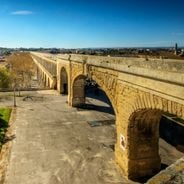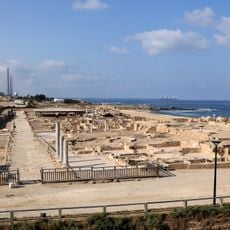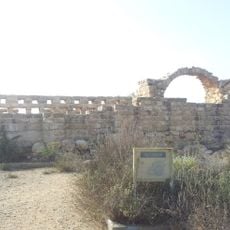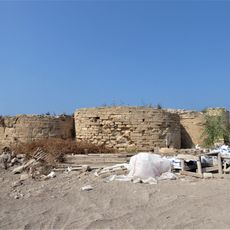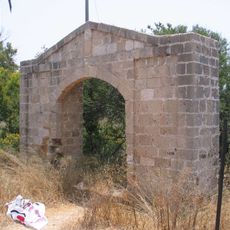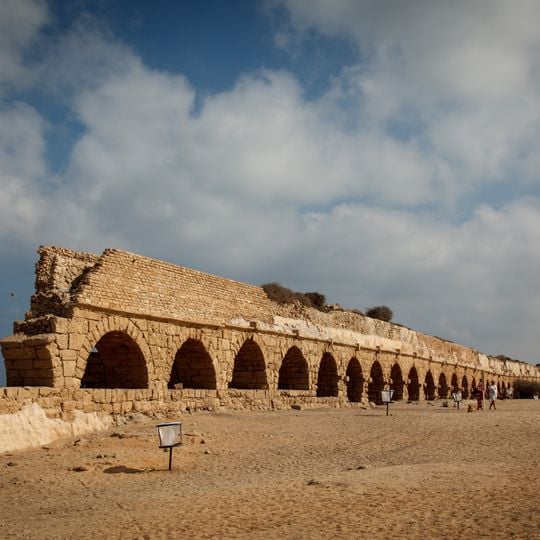
Ancient Roman aqueduct in Caesarea Maritima, Roman water conveyance structure at Mediterranean coast, Israel.
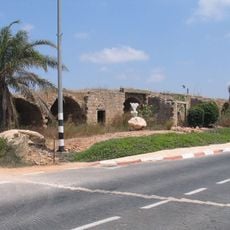
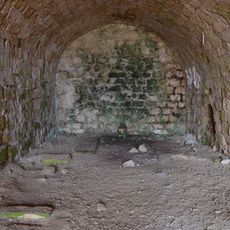
The ancient Roman aqueduct of Caesarea Maritima is a water conveyance system made of limestone blocks, consisting of two parallel channels that ran from springs near Shuni to the coastal city. The structure carried water across varying terrain to supply this major port settlement.
King Herod ordered the first section built between 22 and 10 BCE to supply the developing city with water. Emperor Hadrian later commanded an expansion around 130 CE to meet the needs of the growing population.
Roman soldiers carved inscriptions and legion symbols into the aqueduct's walls, leaving traces of their presence along the structure near Beit Hanania. These markings reveal which military units worked on this project and how much the Romans valued such engineering achievements.
The ruins are accessible along Caesarea's beach, with parking facilities nearby and no entrance fee to view them. Visitors can examine the remains directly from the beach area and take photographs.
The structure operated for around 1200 years while managing elevation changes through a sophisticated engineering system. This long lifespan shows how durable Roman construction was and how their solutions handled difficult terrain.
The community of curious travelers
AroundUs brings together thousands of curated places, local tips, and hidden gems, enriched daily by 90,904 contributors worldwide.