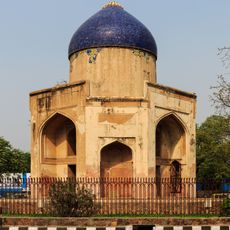
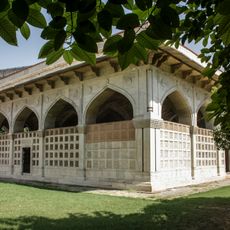
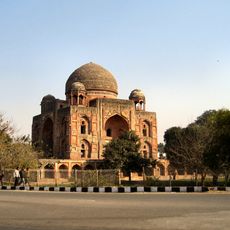
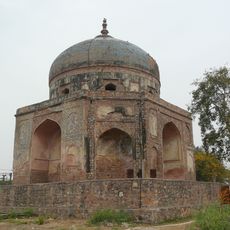
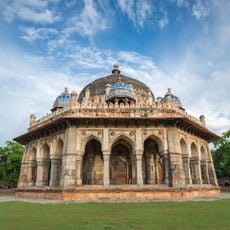
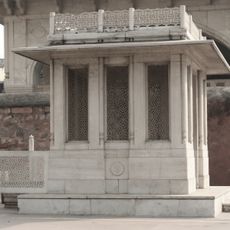
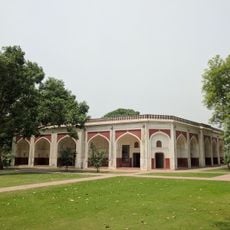
Humayun's Tomb, Mughal tomb in Nizamuddin East, Delhi, India
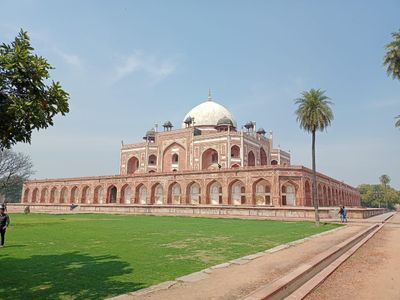
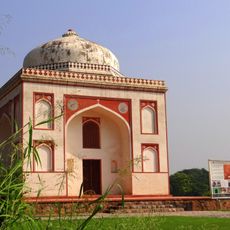
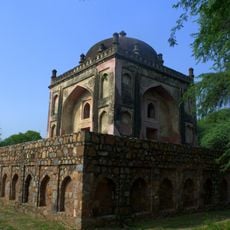
Humayun's Tomb is a red sandstone mausoleum in Nizamuddin East, Delhi, built on an 8-metre-high square platform whose cut corners give it an octagonal outline. Its facade centres on a tall recessed arch framed by smaller arched niches, with a white marble bulbous dome on a high neck and two small domed pavilions on the roofline. White marble inlay patterns cover the sandstone, and the platform's base holds 56 cells with more than 100 graves.
Empress Bega Begum, Humayun's first wife and chief consort, ordered the tomb built; construction began in 1565 and finished in 1572 at a cost of 1.5 million rupees, paid by her. The Persian architect Mirak Mirza Ghiyas, brought from Herat, died before completion, and his son Sayyid Muhammad finished the work. Its charbagh garden and domed form set the model for later Mughal tombs, culminating in the Taj Mahal.
Indian families visit the tomb regularly on weekends, strolling through the spacious gardens where children play and couples rest on the lawns. Wedding photographers often use the arcades and water channels as backdrops for bridal couples dressed in traditional attire.
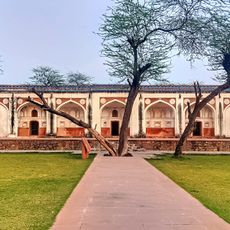
The monument opens daily from sunrise to sunset and is quietest during early morning or late afternoon. Wide paved paths connect the main tomb to surrounding gardens and smaller monuments within the sprawling complex.
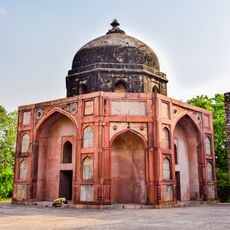
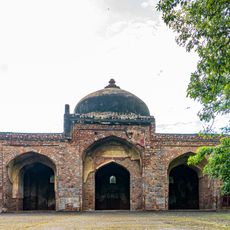
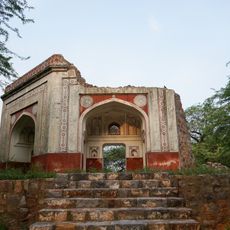
Within the walls of the complex lie over 100 graves scattered throughout, housing members of the Mughal dynasty and their relatives. Many of these burial sites sit inside smaller pavilions and side chambers distributed across the grounds and often overlooked by visitors.
The community of curious travelers
AroundUs brings together thousands of curated places, local tips, and hidden gems, enriched daily by 92,074 contributors worldwide.