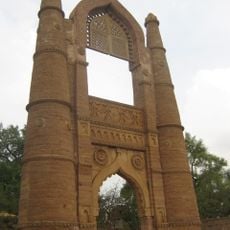
Dashavatara Temple, Deogarh, Hindu temple in Deogarh, India.
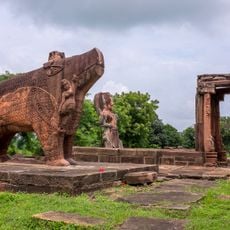
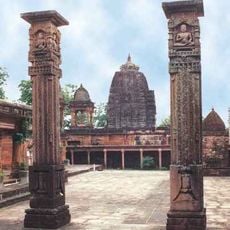
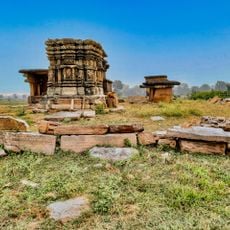
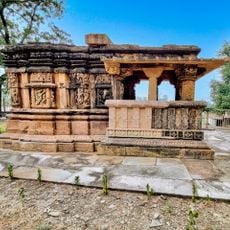
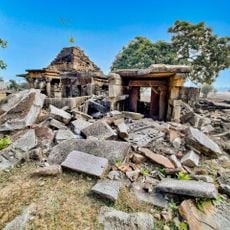
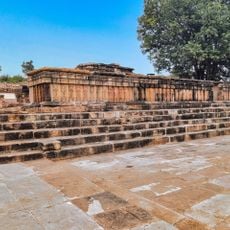
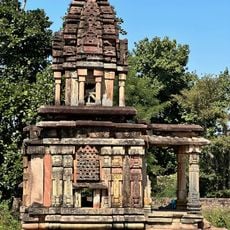
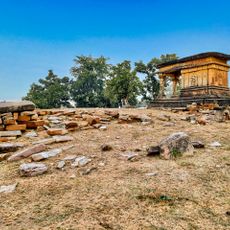
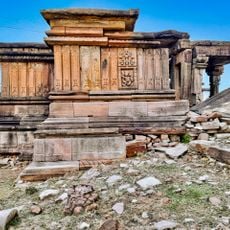
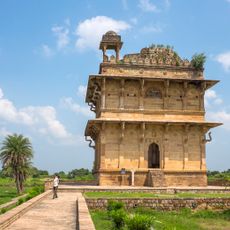
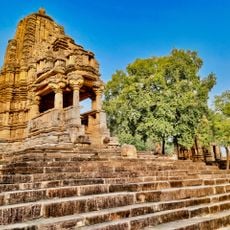
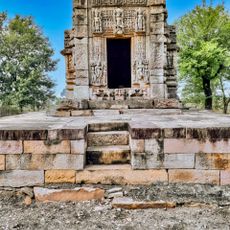
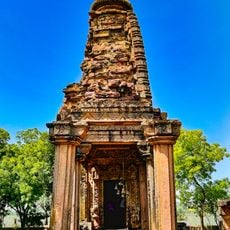
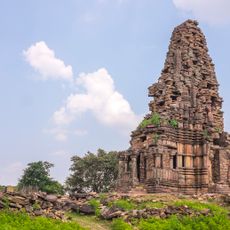
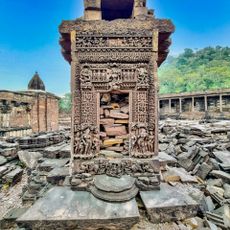
Dashavatara Temple is a ruined early 6th-century Gupta stone temple at Deogarh, Lalitpur district, with a simple one-cell square plan. Its square plinth, about 55.5 feet a side, has steps on all four sides and corner projections that once held small shrines. The sanctum doorway is carved with Vishnu and Lakshmi flanked by other deities, and three outer niches hold Gajendra-moksha, Nara-Narayana and reclining Vishnu reliefs.
The Dashavatara Temple was built in the early 6th century during the Gupta period, making it one of the earliest surviving Hindu stone temples. Alexander Cunningham visited in 1875 and dated it before 700 CE, estimating 600–700 CE. P.C. Mukerji surveyed it in 1899 for the Archaeological Survey of India, recorded its Vishnu reliefs, and named it after the ten avatars, also noting the local name Sagar Marh.
The name refers to Vishnu's ten forms, which appear in relief panels along the outer walls. Visitors today encounter river goddesses Ganga and Yamuna at the entrance, carved as guardians of the sacred threshold.
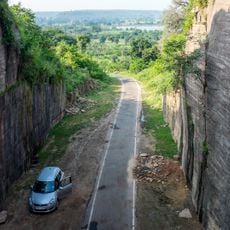
The location about 32 kilometers (20 miles) from Lalitpur requires a short journey along local roads. Visiting between October and March is more comfortable, as temperatures are milder and the light shows the stone carvings more clearly.
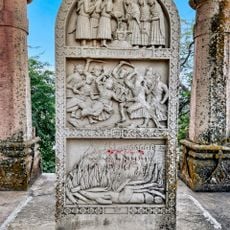
The three large relief panels on the outer walls show rare narrative scenes from Vishnu myths, still clearly readable today. Each panel works like a framed picture, allowing visitors to follow the stories in detail.
The community of curious travelers
AroundUs brings together thousands of curated places, local tips, and hidden gems, enriched daily by 92,672 contributors worldwide.