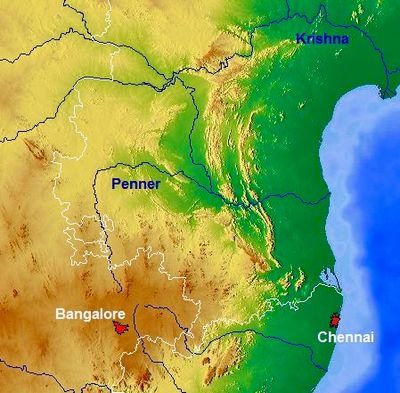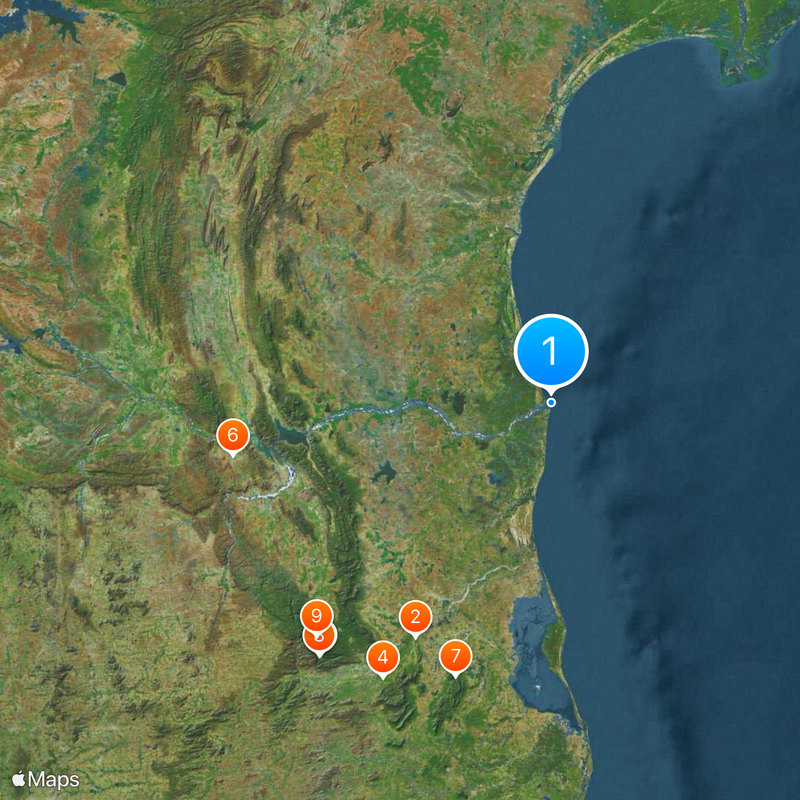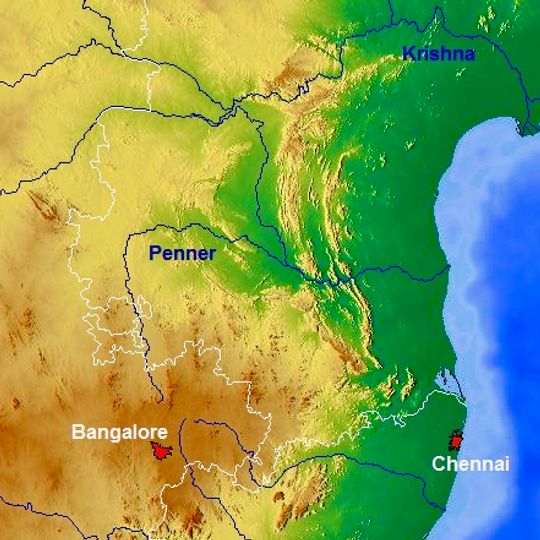
Penna River, River system in Karnataka and Andhra Pradesh, India
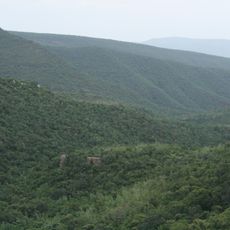
The Penna River is a river system in Karnataka and Andhra Pradesh, India, rising from the Nandi Hills and flowing through farmland and rocky sections. The riverbed shifts from narrow gravel passages upstream to wide sandy banks near the Bay of Bengal.
Farmers dug canals to water their rice fields as early as the 16th century, relying on the flow during monsoon rains. British engineers widened some of these channels in the 19th century to manage dry spells more effectively.
Fishermen work from small boats with nets they mend during the dry months when water levels drop. Women wash clothes along the banks where shallow sections make it easier to beat fabric against smooth stones.
The banks are easiest to reach during the dry months from November to March when water levels are lower. Locals can point out paths along the river that are less muddy and safer to walk.
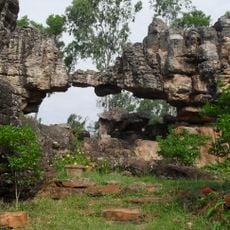
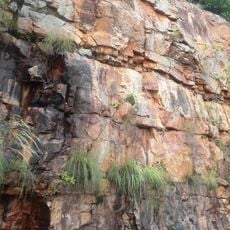
The water turns reddish during the monsoon when erosion washes iron oxides from highland soils into the flow. Geologists have found rocks in the upper basin that are over 3 billion years old, some of the oldest on Earth.
The community of curious travelers
AroundUs brings together thousands of curated places, local tips, and hidden gems, enriched daily by 92,667 contributors worldwide.