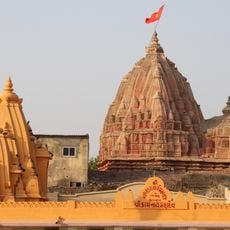
Gir National Park, Wildlife sanctuary in Gujarat, India.
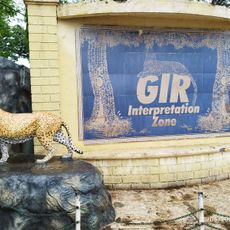
Gir Forest is a nature reserve and national park in Junagadh district, Gujarat, covering 1,412 square kilometers (545 square miles) of dry deciduous woodland, open grassland, and thorny scrub. The terrain shifts between rocky hills and flat valleys, cut by seasonal rivers and artificial waterholes that draw animals year-round.
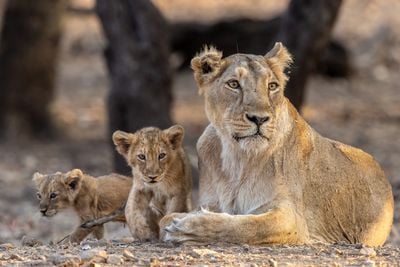
By the late 19th century only about a dozen Asiatic lions survived, all in the Gir Forest, then part of the Nawab of Junagadh's private hunting grounds. British viceroys raised the decline with the Nawab, who established the sanctuary and banned hunting. The forest was declared a wildlife sanctuary in 1969 and a national park in 1965, covering 258.71 km2 of fully protected land.
The lion appears in local lore as the king of the forest, and in Sanatan tradition the goddess Amba rides a lion. The name Singapore means "lion city", a reminder that lions once ranged far beyond Gir. Gujarati villagers near the park still use the lion as a symbol of courage.
Gir is shut from 16 June to 15 October every year for the monsoon, so plan visits between mid-October and mid-June. The core national park covers 258.71 km² of the 1,410.30 km² reserve, and the Kamleshwar Dam reservoir on the Hiran river is the largest water body in the area.
The 2015 census counted 523 lions: 109 males, 201 females and 213 cubs, spread across Junagadh, Gir Somnath, Amreli and Bhavnagar districts. The first modern count was made between 1948 and 1963 by Mark Alexander Wynter-Blyth, principal of Rajkumar College, Rajkot, and R.S. Dharmakumarsinhji.
The community of curious travelers
AroundUs brings together thousands of curated places, local tips, and hidden gems, enriched daily by 92,310 contributors worldwide.