Manikarnika Ghat, Hindu cremation ghat in Varanasi, India
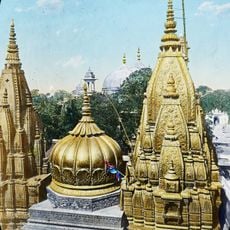
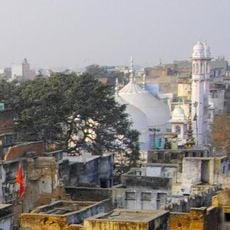
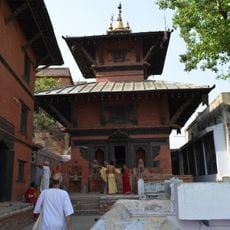
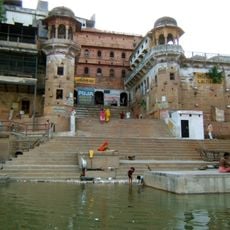
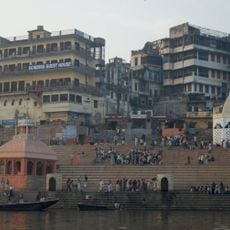
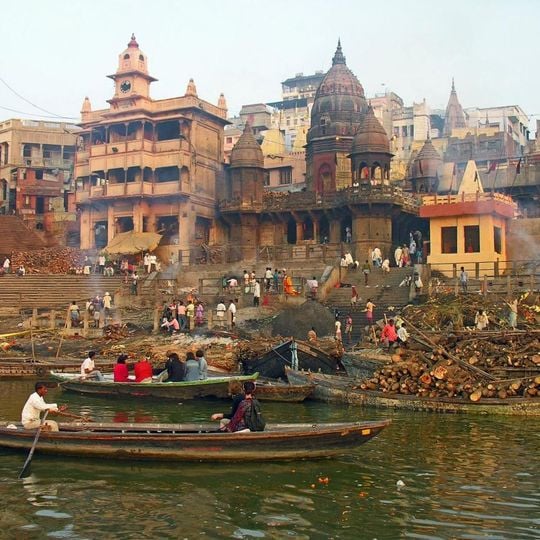
Manikarnika Ghat is a stepped stone embankment of pale tan and weathered grey masonry rising in broad tiers from the Ganges. On the upper terraces stand tall ochre and terracotta temple buildings with stacked storeys, arched windows and domed, spire-like roofs; the central one has a dark ribbed dome on a columned pavilion. A low yellow pavilion with a red roof stands to the right, and wooden logs are heaped on the steps in front.
Manikarnika Ghat was the first stone ghat in Varanasi, built in 1372 AD by two king brothers, as the earliest inscriptions on the steps record. Bajirao Peshwa funded reconstruction in 1735, and Devi Ahilyabai Holkar supported further rebuilding in 1791, also paying for a temple and the unfinished Zenana ghat bathing enclosure for women. Raja Sir Moti Chand completed another reconstruction in 1912, raising the platform above flood level.
Believers hold this place as a direct path to liberation from the cycle of rebirths, known in Hinduism as moksha. Families from across India travel here to cremate their departed at this sacred site.
Cremations run around the clock without interruption, so visitors can witness ceremonies at any time. Visitors should respect the privacy of mourning families and politely ask permission before taking photographs.
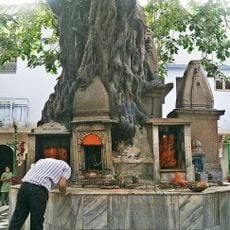
Legend tells that during a ritual bath, an earring of Shiva fell into the Manikarnika well, giving the place its name. The sacred fire here is said to have burned continuously for thousands of years, passed down from the first flame lit by Shiva himself.
The community of curious travelers
AroundUs brings together thousands of curated places, local tips, and hidden gems, enriched daily by 92,723 contributors worldwide.