Gyanvapi Mosque, Religious complex in Varanasi, India
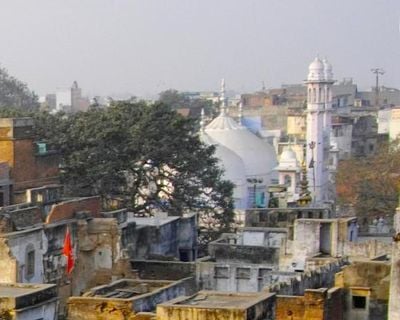
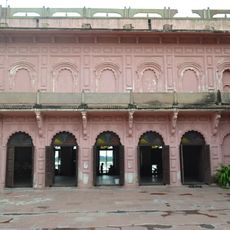
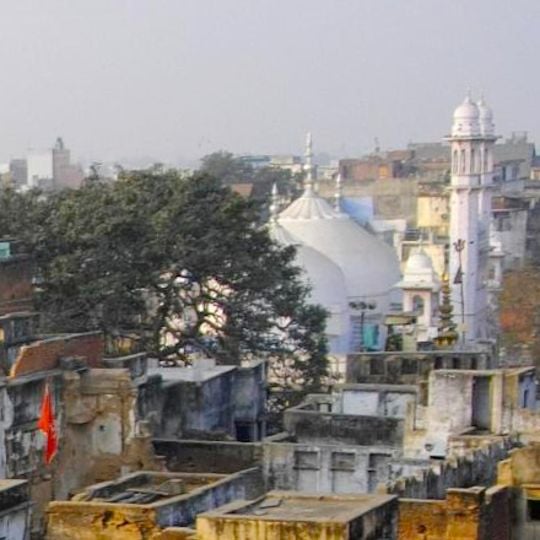
Gyanvapi Mosque is a religious complex in Varanasi with tall minarets, domes, and a courtyard surrounded by columns from earlier building phases. The compound borders neighboring temple grounds directly and sits in a densely built part of the old city.
The site was originally a Vishweshwar temple to Shiva, built in the late 16th century by Todar Mal with Narayana Bhatta. Aurangzeb issued a firman in 1669 ordering its destruction, and the mosque was constructed around 1678. The plinth of the temple was kept as the courtyard, and the mosque incorporates carved pillars with Hindu motifs.
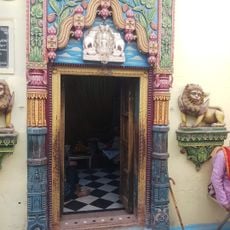
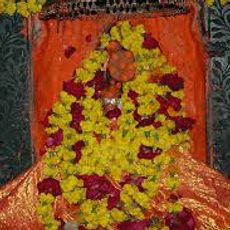
The name Gyanvapi comes from a well in the compound, adjoining the Kashi Vishwanath temple; the old temple's western wall, which looks like a temple gateway, stands in the mosque. Before the 1991 restrictions, the Shringar Gauri image on a platform before this wall received regular worship; today it is worshipped once a year, on the third day of Chaitra Navratri.
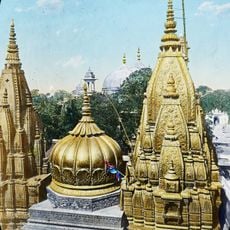
The mosque stands beside the Kashi Vishwanath temple complex in Varanasi's old city, its western wall facing the temple grounds. Worship rights inside were confirmed by a court ruling on 15 August 1937, and the complex has been under legal dispute since suits filed in 1991 and 2021. Expect tight security and restricted access around the site.
The name comes from a deep well in the courtyard, whose Sanskrit designation means well of knowledge. Local accounts say underground passages run from the well shaft to other parts of the old city.
The community of curious travelers
AroundUs brings together thousands of curated places, local tips, and hidden gems, enriched daily by 92,077 contributors worldwide.