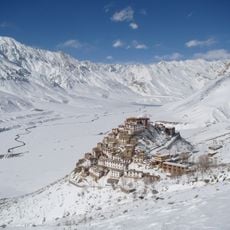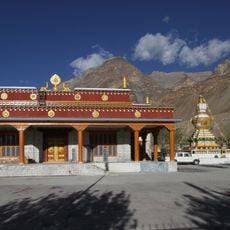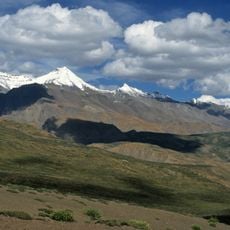
Dhankar Gompa, Buddhist temple in Spiti Valley, India
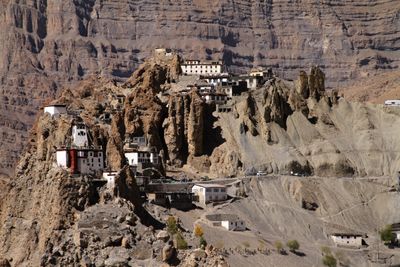
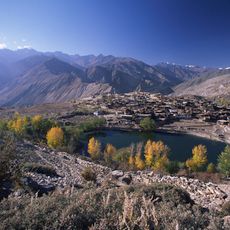
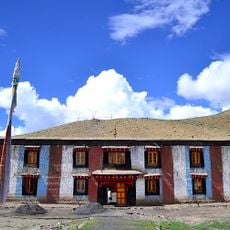
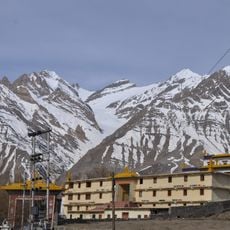
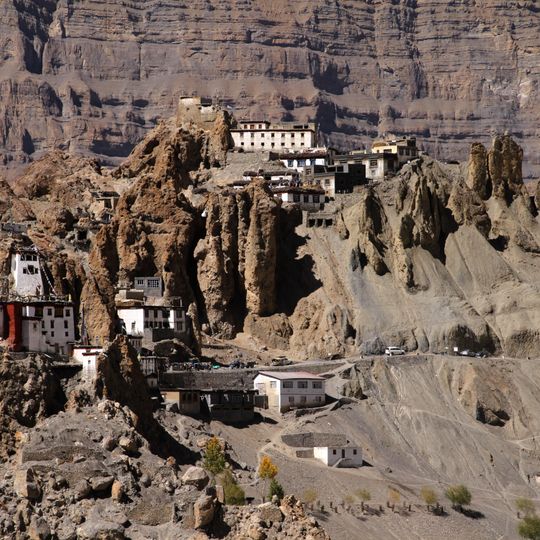
Dhankar Gompa is a fort monastery on a 300-metre rock spur above Dhankar village, between Kaza and Tabo in the Spiti Valley. Its whitewashed main building sits at the top with a flat roof and a row of small square windows; smaller white buildings with flat roofs and dark openings are built into the eroded rock face and at its base. The plastered walls are of mud-brick or stone.
Dhankar Gompa was the traditional capital of the Spiti Valley Kingdom in the 17th century, with some features dating to the 12th century. It was the seat of the Nonos, the early rulers of Spiti, who had the right to cultivate nearby government land and were required to keep the fort in repair. They dispensed justice with harsh penalties until the British replaced them. The monastery belongs to the Gelugpa order and is also called Lhaöpé Gönpa, after the lama Zla-'od, born in 1121, its founder or renovator.
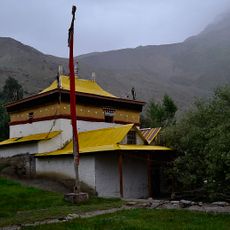
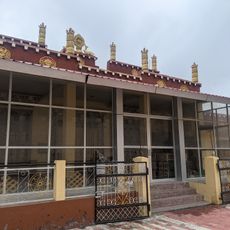
The name Dhangkar combines dang (cliff) and kar (fort), meaning "fort on a cliff". The monastery belongs to the Gelug school, and the nearby village of Shichilling holds a newer monastery with about 150 monks. Inside, visitors can see a Vairocana statue of four figures seated back-to-back and crumbling thangkas.
Access is via a mountain road from Kaza, and sturdy footwear plus time to adjust to the high altitude are essential before visiting. Lodging is available in the newer monastic building during warmer months, so plan your visit accordingly to explore the site comfortably.
The monastery was reported to house 90 monks in 1855. In 2006 the World Monuments Fund listed Dhankar Gompa among the 100 most endangered sites, and the nonprofit Dhangkar Initiative works on its conservation.
The community of curious travelers
AroundUs brings together thousands of curated places, local tips, and hidden gems, enriched daily by 94,667 contributors worldwide.