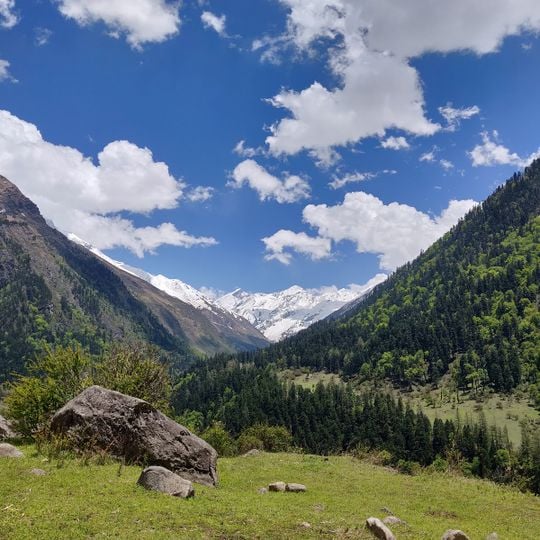
Govind Pashu Vihar National Park and Sanctuary, National park in Uttarkashi, India
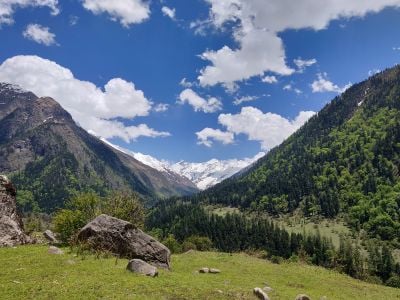
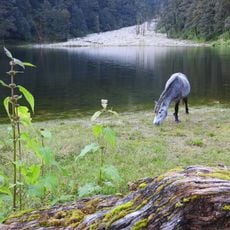
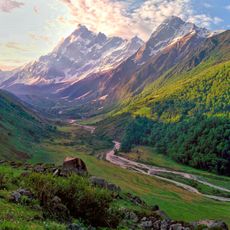
Govind Pashu Vihar National Park and Sanctuary covers 958 km2 in the Supin Range of the Garhwal Himalayas, Uttarkashi district, Uttarakhand. Its altitude runs from 1,400 to 6,323 metres, from western Himalayan broadleaf forest with chir pine, deodar cedar and oak up through subalpine conifer forest of blue pine, silver fir and spruce to alpine shrub and meadow. Inside lie the Har Ki Doon valley and the Ruinsiyara high-altitude lake.
Govind Pashu Vihar was first declared a wildlife sanctuary on 1 March 1955, in the Supin Range of Uttarkashi district, and was later upgraded to a national park. It is named after Govind Ballabh Pant, who became India's Home Minister in 1955. Before independence the British managed the area for timber extraction and road building; after independence the state forest department took over and timber extraction declined.
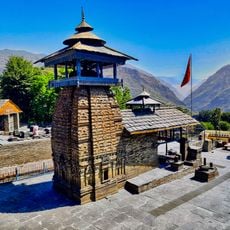
The park is named after Govind Ballabh Pant, a freedom fighter and India's Home Minister from 1955, credited with establishing Hindi as an official language. Villages such as Naitwar, Taluka and Osla lie along the route to Har Ki Doon, and the forest rest houses there serve trekkers heading into the valley.
The best times to visit are April through June and September through November when mountain conditions are most stable. Permits are required for entry, and visitors should be prepared for high altitude and basic amenities throughout the area.
The Snow Leopard Project of the Government of India is managed from this sanctuary, and the park is also one of the remaining Himalayan strongholds of the bearded vulture, a scavenger that keeps grazing grounds free of carcasses.
The community of curious travelers
AroundUs brings together thousands of curated places, local tips, and hidden gems, enriched daily by 92,679 contributors worldwide.