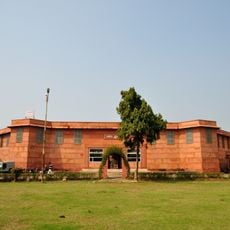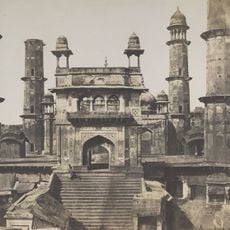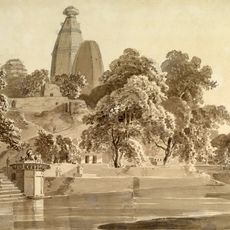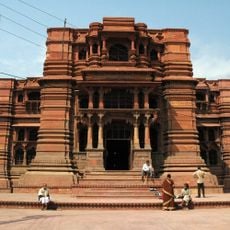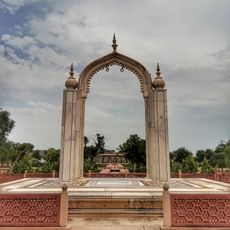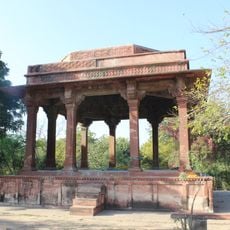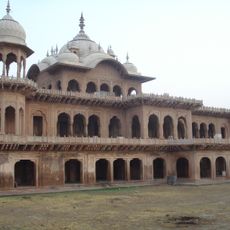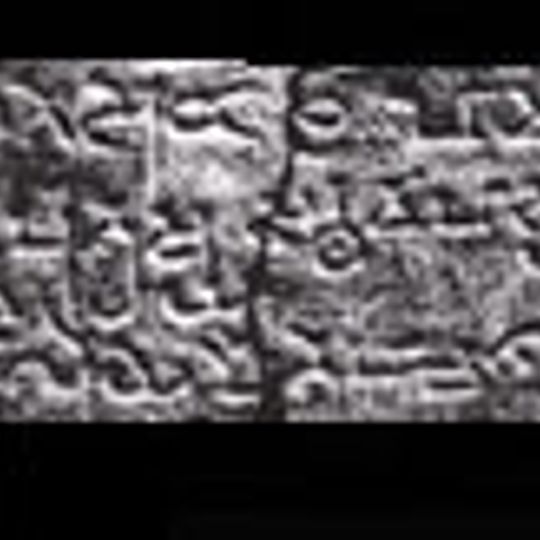
Yavanarajya inscription, Ancient stone inscription at Government Museum Mathura, India
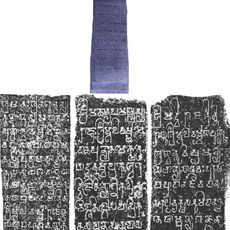
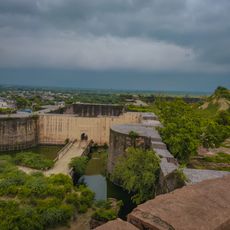
The Yavanarajya inscription is a Sanskrit text carved on red sandstone in Brahmi script, now housed in the Government Museum of Mathura. It records the construction of a water well and reservoir by a Brahmin merchant family.
The inscription originates from the 1st century BCE, marking a period of active Greek-Indian contact. The recorded date references year 116 of Yavana rule, providing scholars with crucial chronological anchors for understanding this era.
The inscription reveals how Greek traders and local merchants coexisted in ancient India, with the term Yavana marking their presence. It shows that people from different backgrounds worked together on public works like water systems.
The stone is easily accessible in Mathura's museum where it stands alongside many other ancient artifacts. Take time to study the carved text closely, as the details offer insights into the craftsmanship and language of that era.
This inscription is one of the few surviving sources that provides an exact date from the Indo-Greek period. It proves invaluable to historians because very few objects from that era can be so precisely dated.
The community of curious travelers
AroundUs brings together thousands of curated places, local tips, and hidden gems, enriched daily by 60,000 contributors worldwide.