Radha Rani Temple, Hindu temple in Mathura, India
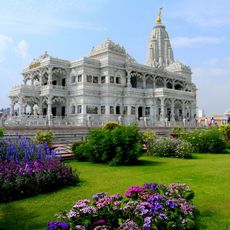
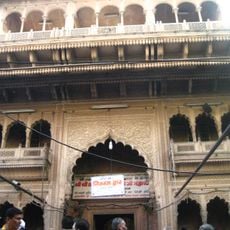
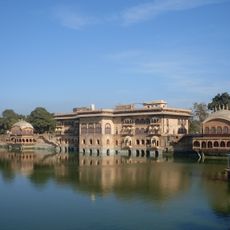
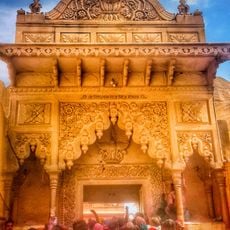
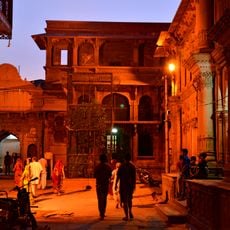
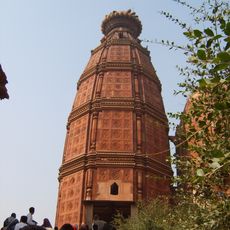
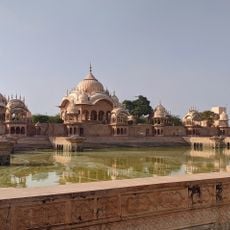
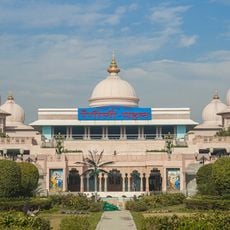
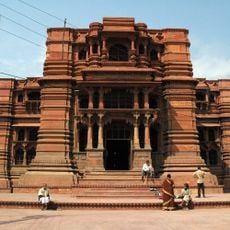
Radha Rani Temple stands on Bhanugarh hill in Barsana, Mathura district. It is built of red and white sandstone, with arches, pillars and domes in a Rajput style resembling Mughal-era work, and hand carvings and paintings on the inner walls and ceilings. A long arcaded colonnade runs along the facade, with a large recessed central archway above it and a rounded main dome with a smaller cupola to the left. More than 200 stairs lead up to the main shrine.
The temple is traditionally attributed to King Vajranabh, Krishna's great-grandson, about 5,000 years ago. After it fell into ruins, Narayan Bhatt, a disciple of Chaitanya Mahaprabhu, rediscovered the icons. Raja Bir Singh Deo built a temple in 1675 AD, and the present structure was built by Narayan Bhatt with help from Raja Todarmal, a governor in Akbar's court.
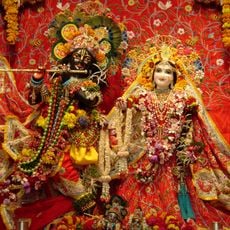
Worshippers often wear bright clothing in shades of orange and yellow during their visits, colors associated with the divine love between Radha and Krishna. Many visitors bring fresh flowers and small sweets as offerings, placing them before the images in the main prayer room.
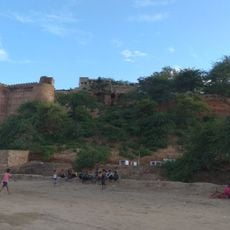
Reaching the temple means climbing more than 200 stairs from the foot of Bhanugarh hill, where the palace of Vrishabhanu Maharaj stands. The shrine sits on the hilltop, so the whole of Barsana is visible from its premises. The temple keeps separate summer and winter hours, opening early in the morning and again in the late afternoon.
The temple stands on Bhanugarh hill, about 250 metres high, and more than 200 stairs lead up to the main shrine. At the foot of these steps is the palace of Vrishabhanu Maharaj, with idols of Vrishabhanu, Kirtida, Shridama and Shri Radhika; the Brahma temple and the Ashtasakhi temple stand close by. From the temple premises the whole of Barsana is visible.
The community of curious travelers
AroundUs brings together thousands of curated places, local tips, and hidden gems, enriched daily by 94,670 contributors worldwide.