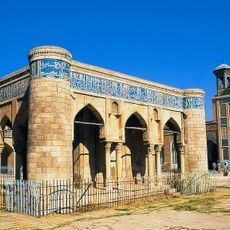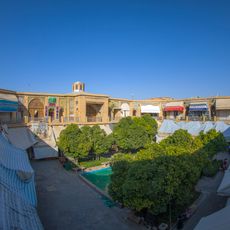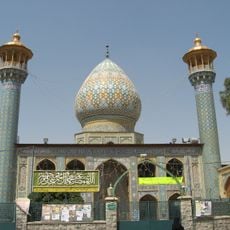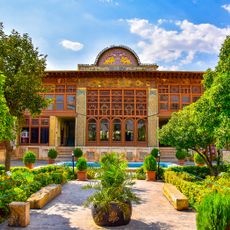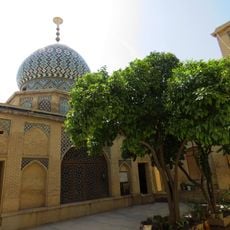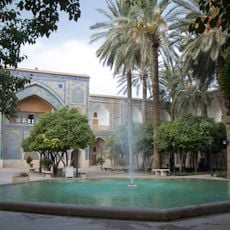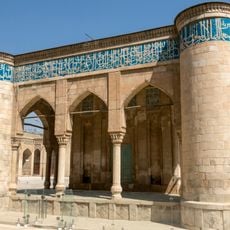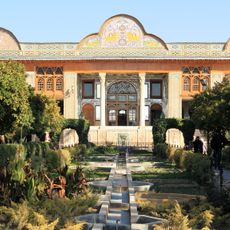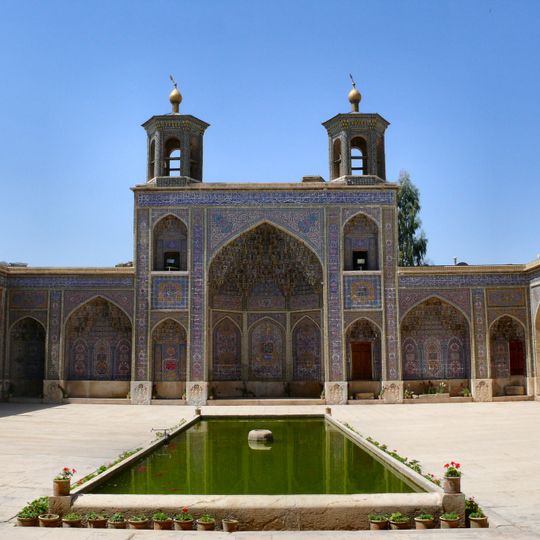
Nasir-ol-Molk Mosque, 19th-century mosque in Shiraz, Iran
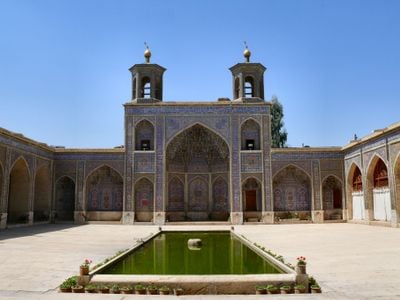
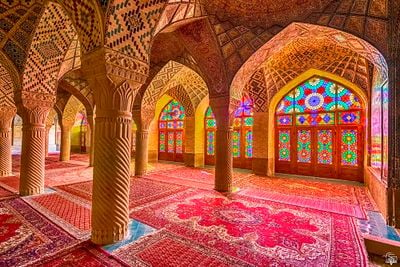
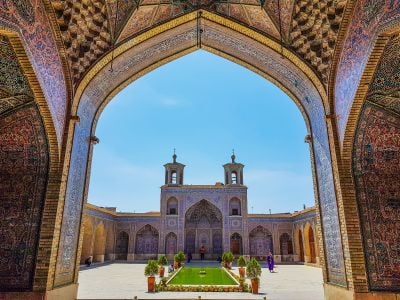
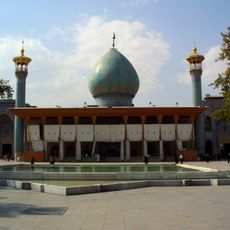
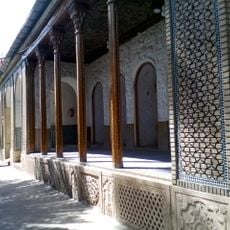
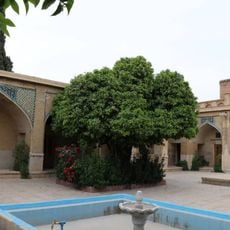
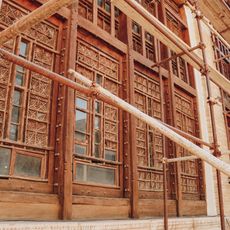
The structure presents two iwans with pointed arch entrances, an octagonal fountain in the courtyard, and a prayer hall featuring twelve columns with stained glass windows displaying complex geometric patterns and floral designs in shades of pink, blue, and yellow while muqarnas vaulting decorates the ceiling.
Mirza Hasan Ali Nasir al Molk, a member of the Qajar family, commissioned architect Mohammad Hasan Memar and engineer Mohammad Reza Kashi Paz for the construction that took twelve years and concluded in 1888 with completion of the western iwan while combining traditional Safavid techniques with new glass-working methods.
The colored glass panels and ornamental tilework demonstrate the height of Persian craftsmanship during the Qajar era and serve today as an active place of prayer for the Muslim community while also functioning as an educational site for traditional Islamic architecture and art.
The best visiting period falls between October and March when cooler temperatures prevail. Access is via Lotf Ali Khan Zand Street in the historic Gowad-e-Arabān neighborhood. Visitors should wear modest clothing and head coverings are required for women. A small museum on the upper floor displays Persian calligraphy and historical photographs.
The architects employed seven different types of stained glass, including green glass from Belgium and red glass from Germany, to create specific spectral effects. An underground channel called a qanat supplies water to the fountain and naturally cools the building during summer months.
The community of curious travelers
AroundUs brings together thousands of curated places, local tips, and hidden gems, enriched daily by 91,240 contributors worldwide.