Hallgrímskirkja

Log in to your account

AroundUs is a community-driven map of interesting places, built by curious explorers like you. It grows with every review, story, and photo you share.
Connect to save your favorite spots, contribute locations, and create personalized routes.
By continuing, you accept our Terms and Conditions and our Privacy Policy
Add to collection
Map
Suggest a change
Share

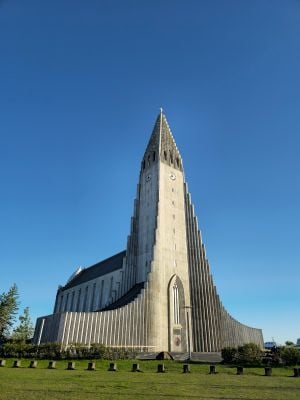
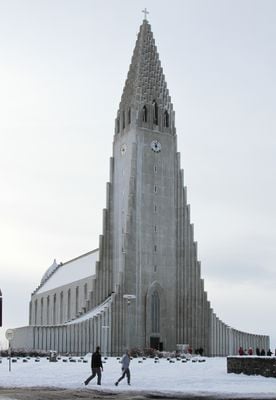
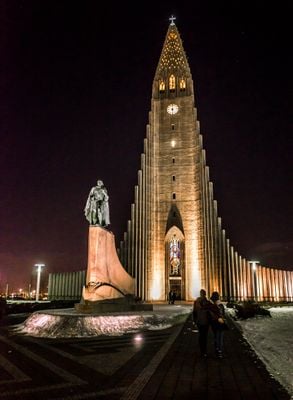
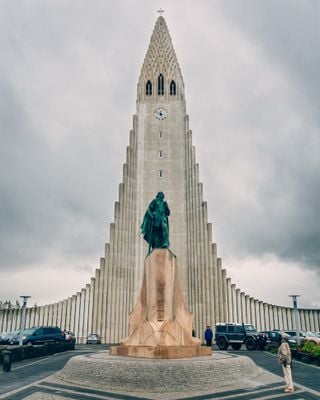
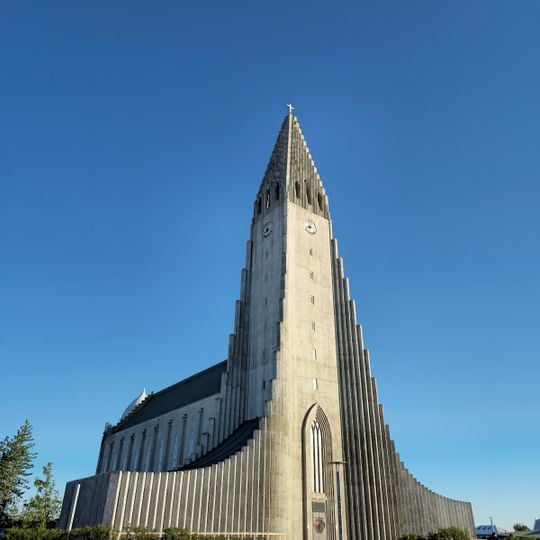
Hallgrímskirkja, Lutheran church in Reykjavík, Iceland

Hallgrímskirkja is a Lutheran church in Reykjavík whose slender tower rises 74 meters (243 feet) above the capital. The symmetrical concrete wings echo the shape of basalt columns found along the Icelandic coast.

The architect Guðjón Samúelsson designed this church in the 1930s, but construction only began in 1945 and stretched across four decades. Its completion in 1986 made it one of the longest building projects in Iceland.

This place is named after Hallgrímur Pétursson, a 17th-century poet whose hymns remain part of Icelandic devotion. The name connects the building to a long literary and religious thread in the country.

An elevator takes visitors to the observation platform, which offers wide views over Reykjavík and the sea beyond. The church opens most days and draws many people around midday.

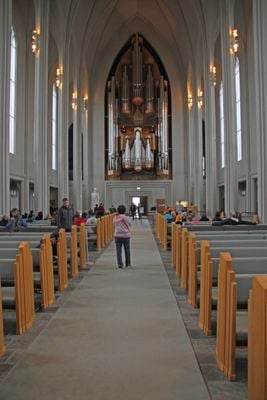
Inside stand two large pipe organs, with the bigger one holding over 5000 pipes and reaching 15 meters (49 feet) in height. Concerts on these instruments draw both locals and travelers.

Location: Reykjavík

Inception: 1986

Architects: Guðjón Samúelsson

Official opening: October 26, 1986

Architectural style: Gothic Revival, expressionist architecture

Height: 74 m

Accessibility: Wheelchair accessible

Opening Hours: Monday-Saturday 11:00-15:00; Sunday 10:00-15:00

Website: http://hallgrimskirkja.is

GPS coordinates: 64.14179,-21.92674

Latest update: December 4, 2025 19:03

Bell towers of europe

Bell towers from different periods and architectural styles across Europe. These structures display regional building traditions and function as landmarks in their cities

Neogothic architecture: cathedrals, parliaments, universities

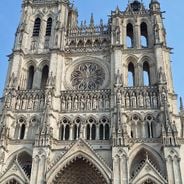
This collection presents neogothic architecture from the 19th and early 20th centuries, when architects across Europe, the Americas, Asia and Oceania revived medieval building forms. The movement began in Britain and spread worldwide, employing pointed arches, flying buttresses, ribbed vaults and stone spires. This architectural language was used for churches, universities, government buildings and railway stations. The collection includes religious structures like Cologne Cathedral and Notre-Dame Basilica in Montreal, government buildings such as the Parliament Complex in Ottawa and the Palace of Westminster in London, educational institutions like the University of Glasgow Main Building, and transport hubs including St. Pancras Station in London and Victoria Terminus in Mumbai. These structures demonstrate how architects adapted medieval techniques to modern building materials and functions.

Modern concrete churches of the world

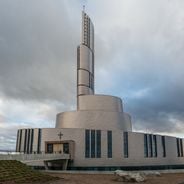
Concrete churches from different countries show the architectural evolution of the 20th century. These structures combine geometric forms with modernist designs and use light as a design element. The buildings demonstrate the technical capabilities of concrete as a construction material for religious spaces.

The Best Spots in Iceland and Reykjavik

Iceland is an island shaped by ice and fire. Glaciers cover much of the interior while geothermal areas show that something is always happening beneath the surface. The landscapes here look different from most places: black sand beaches formed by volcanic activity, fjords cutting deep into the coast, waterfalls dropping over cliffs and canyons with moss covered walls. Vatnajökull in the southeast is Europe's largest glacier, while smaller ice caps like Snæfellsjökull or Drangajökull have their own character. Reykjavik sits by the ocean and mixes city life with access to nature. The Harpa concert hall stands by the harbor, Hallgrímskirkja church rises above the rooftops, and along the shore you find the Sólfar sculpture. Lake Tjörnin lies in the center of town. Outside the city, routes lead to natural sites: the Blue Lagoon with its milky blue water, Strokkur geyser that erupts every few minutes, Gullfoss waterfall where a river plunges into a canyon. The southern coast shows different faces. Near Vík there is Reynisfjara beach with its basalt columns and black sand, and not far away the cliff at Dyrhólaey. Diamond Beach near Hornafjörður is scattered with ice chunks washed up by the sea. In the north, Lake Mývatn attracts visitors with its volcanic surroundings, while the Westfjords with the Hornstrandir reserve and the red sand of Rauðasandur beach belong to the more remote parts of the country. The Ring Road connects most of these places and circles the entire island.

Reviews

Visited this place? Tap the stars to rate it and share your experience / photos with the community! Try now! You can cancel it anytime.

« Hallgrímskirkja - Lutheran church in Reykjavík, Iceland » is provided by Around Us (aroundus.com). Images and texts are derived from Wikimedia project under a Creative Commons license. You are allowed to copy, distribute, and modify copies of this page, under the conditions set by the license, as long as this note is clearly visible.

Discover hidden gems everywhere you go!

From secret cafés to breathtaking viewpoints, skip the crowded tourist spots and find places that match your style. Our app makes it easy with voice search, smart filtering, route optimization, and insider tips from travelers worldwide. Download now for the complete mobile experience.

Around Us App Screenshot

A unique approach to discovering new places

Le Figaro

All the places worth exploring

France Info

A tailor-made excursion in just a few clicks

20 Minutes