Abbey of Thelema, Occult commune in Cefalù, Italy
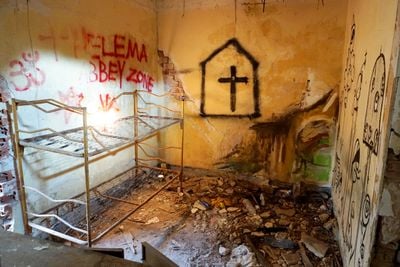
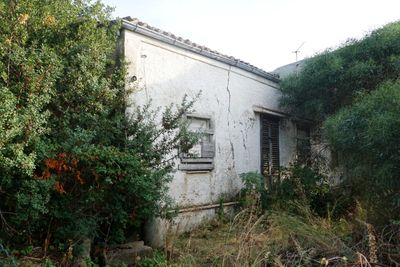
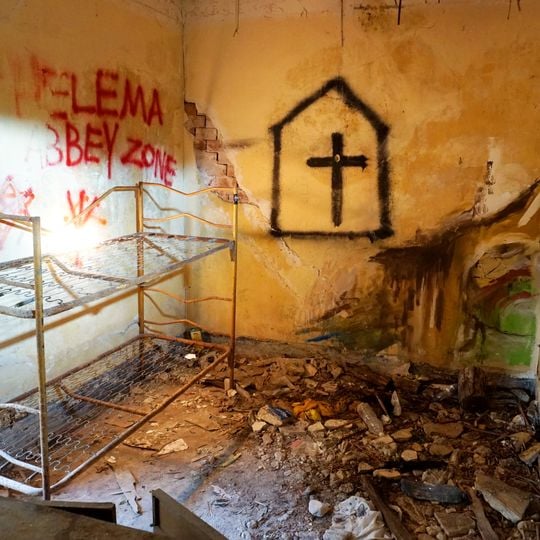
The Abbey of Thelema is a small single-storey villa in Cefalù with whitewashed, roughly textured walls and a low-pitched roof edged with curved terracotta tiles. Its facade has a small window with weathered greyish-brown wooden shutters and a taller shuttered opening; thin cracks run down the plaster and dense green foliage grows against the left wall. Inside, rooms with yellow ochre plaster, heavily cracked and peeling, preserve red-painted lettering reading "ELEMA 3BEY ZONE" and a black house-shaped outline framing a Christian cross, alongside a rusted metal bunk bed frame.
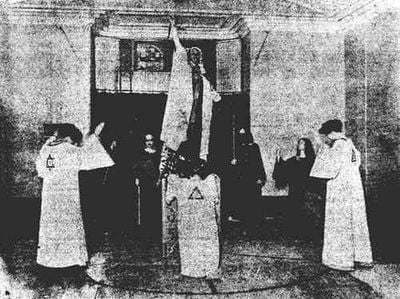
Aleister Crowley founded this center in 1920 as a residence and meeting place for his philosophical movement. Italian authorities closed the community in 1923 and expelled Crowley from the country.
The name comes from the Abbaye de Thélème in François Rabelais's Gargantua and Pantagruel, an anti-monastery whose inhabitants lived "not in laws, statutes, or rules, but according to their own free will and pleasure". Crowley took the Greek word θέλημα (will) from it. Sicilian writers later treated the episode, among them Leonardo Sciascia in Apocrifi sul caso Crowley and Vincenzo Consolo in Nottetempo, casa per casa.
The building sits below the stadium and can be reached via a path from the parking area that leads down to a stairway. The villa stands on private ground and is not always accessible, so it is worth checking in advance whether a visit is possible.
The villa was rented from Baron Carlo La Calce, and after Crowley's expulsion the group's women sold the furniture to Cefalù residents to settle his debts and pay their fares home. Kenneth Anger later filmed the murals for Thelema Abbey (1955), now a lost film.
The community of curious travelers
AroundUs brings together thousands of curated places, local tips, and hidden gems, enriched daily by 93,362 contributors worldwide.