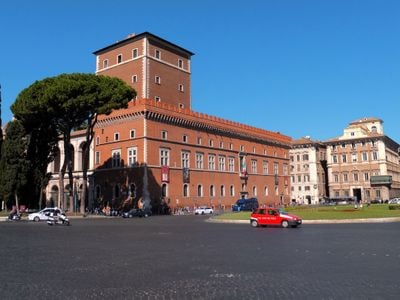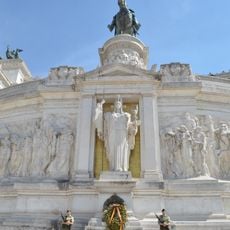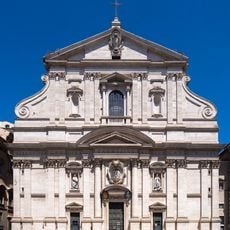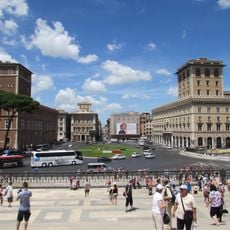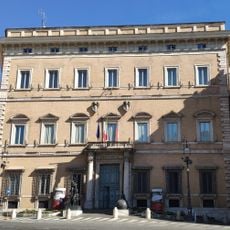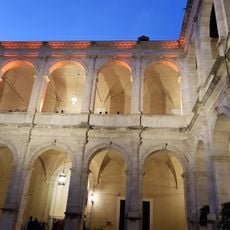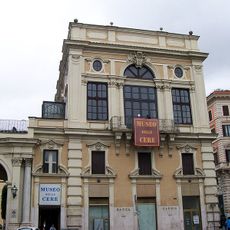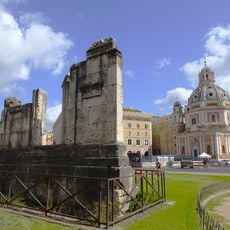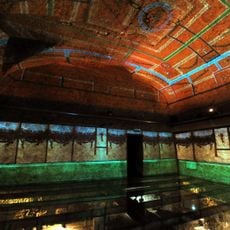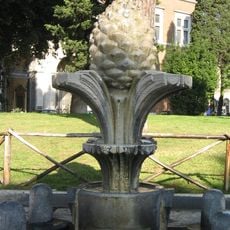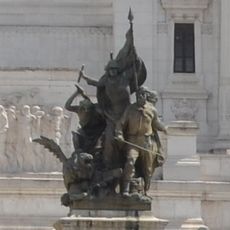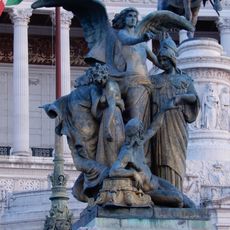
Palazzo Venezia, Renaissance palace in Rome, Italy.
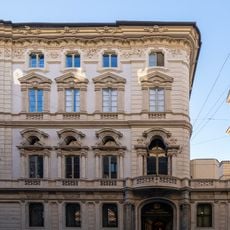
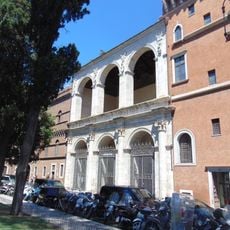
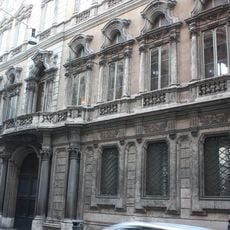
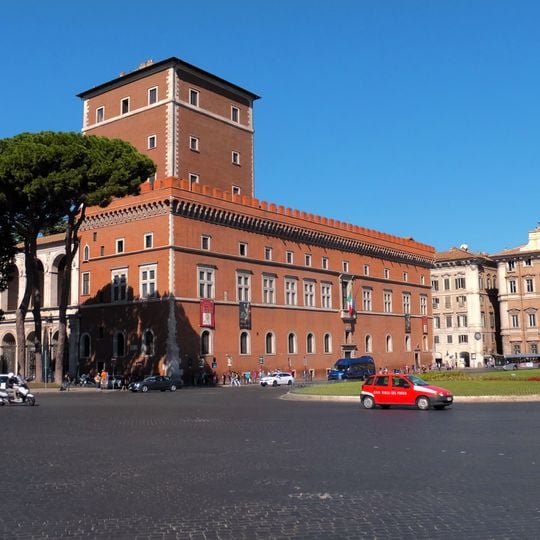
Palazzo Venezia sits in the Pigna district, between the square that carries the same name and Via del Plebiscito, showing itself as a large structure with a square corner tower. Its walls are made of stones taken from Roman ruins, giving the building a squat and heavy appearance.
Venetian Cardinal Pietro Barbo commissioned the construction of this palace in 1455, and it later served as the residence for Pope Paul II. In the 16th century the building then became the seat of the Venetian embassy to the Holy See.
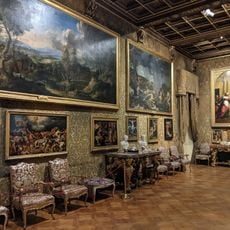
The palace's name comes from its 1564 grant by Pius IV to the Republic of Venice as the seat of its ambassadors to the Holy See, on condition that the Cibo Apartment stay a residence for the cardinals of San Marco. The museum displays the art and antiquities Pietro Barbo collected here, and the Biblioteca di Archeologia e Storia dell'Arte occupies the ground floor and the Torre della Biscia.
The museum inside opens daily and offers reduced rates for young Europeans under 25 years old. On the first Sunday of each month admission is free.
During the fascist era Mussolini used a hall on the first floor as his office and kept the windows lit at night to give the impression of constant work. From his balcony here he delivered several speeches to large crowds in Piazza Venezia.
The community of curious travelers
AroundUs brings together thousands of curated places, local tips, and hidden gems, enriched daily by 94,623 contributors worldwide.