Certosa di Padula, Carthusian monastery in Cilento National Park, Italy
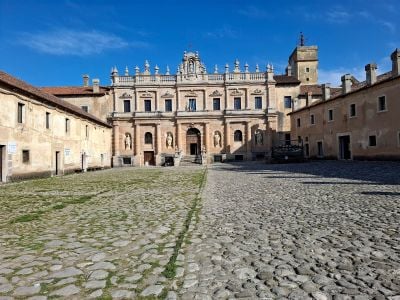
The Charterhouse occupies a wide area with three cloisters and a vast courtyard, surrounded by multi-story wings that house monks' cells, service rooms, and a library. The complex also includes a church with baroque decoration, gardens arranged in geometric patterns, and underground vaults once used for storage.
Tommaso Sanseverino founded the Charterhouse in 1306 and dedicated it to Saint Lawrence, with the layout recalling the saint's martyrdom. Over the centuries, successive building campaigns expanded and decorated the site, especially during the 17th and 18th centuries, when baroque elements were added.
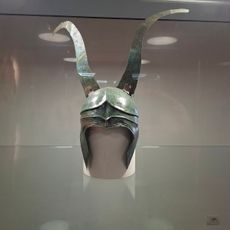
The refectory holds the archaeological museum of Western Lucania, displaying finds from the necropolises of Sala Consilina and Padula, from protohistory to the Hellenistic age. The Carthusians split contemplation from work: cloisters, library and chapels on one side, kitchens, wine cellars, laundries and yards on the other. In most chapels the altar frontals are inlaid in 18th-century scagliola, not marble, the densest concentration of such work anywhere.
Entry is from the eastern side, through a gate into a large rectangular courtyard; the seventeenth-century fountain stands along its right wall, and the garden paths begin beside the access staircase. The complex covers 51,500 m² over three cloisters, so allow several hours and wear sturdy shoes for the cobblestones and stairs.
One of the cloisters is among the largest of its kind in the world and is surrounded by 84 columns that cast gentle shadows in the sunlight. Upstairs, a spiral staircase made of white marble leads to the former library, which visitors often overlook.
The community of curious travelers
AroundUs brings together thousands of curated places, local tips, and hidden gems, enriched daily by 94,303 contributors worldwide.