Protestant Cemetery, Rome, Historic burial ground near Pyramid of Cestius in Testaccio, Rome, Italy
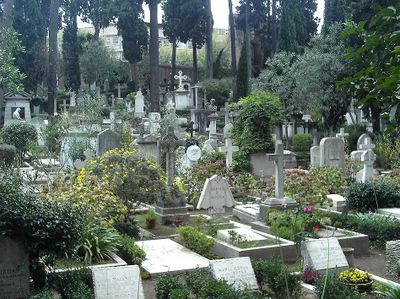
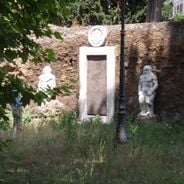
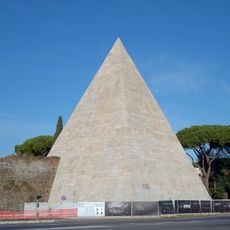
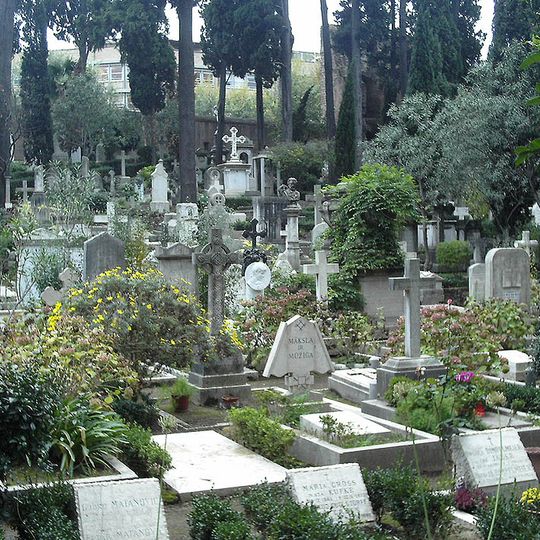
The Protestant Cemetery, also called the Non-Catholic Cemetery, lies beside the Pyramid of Cestius, a tomb of 18–12 BCE later built into the Aurelian Walls. Its oldest section, behind the pyramid, holds upright headstones and crosses on patchy grass; a pale gabled monument is carved "MASLA A MUZIGA" and a slab reads "MARIA CROSS FÜRST". John Keats's rounded headstone, carved with a stringed instrument, stands in tall grass behind a low hedge.
The first burial took place here in 1716 after the Holy Office permitted non-Catholic interments within the city walls. The cemetery expanded through the 18th and 19th centuries, becoming a resting place for diplomats, artists, and scholars from across Europe.
The cemetery's name comes from its long role as the burial ground for non-Catholics in Rome, though those interred were never only British or Protestant. Common graves are divided by nation, including Germany, Greece, Sweden and Romania, and the graves of John Keats and Antonio Gramsci draw visitors. Crosses and inscriptions were forbidden here until 1870.
The entrance stands at Via Caio Cestio 6, next to Piramide metro station and reachable by several bus routes. Visitors should remember this is an active burial ground, so quiet and respectful behavior is expected.
The poets John Keats and Percy Bysshe Shelley rest here, both having died in Italy in the early 19th century, alongside Italian communist Antonio Gramsci. Scientists, diplomats, and artists from many nations also lie buried among the cypress trees.
The community of curious travelers
AroundUs brings together thousands of curated places, local tips, and hidden gems, enriched daily by 93,074 contributors worldwide.