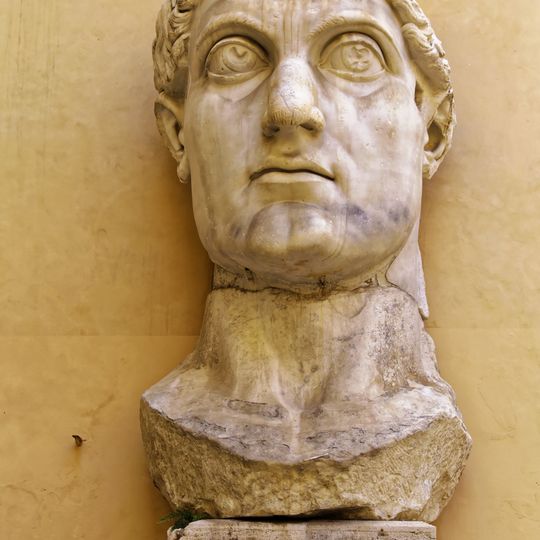
Colossus of Constantine, Colossal statue in Italy
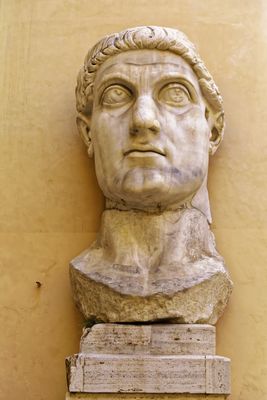
The Colossus of Constantine was a massive acrolithic statue made of marble, combining stone extremities with a differently-constructed body to achieve monumental scale. This type of hybrid construction allowed artists to create towering figures that dominated spaces with sheer size.
This monument was commissioned in 312 CE to celebrate Emperor Constantine the Great and show his power in Rome. It gradually fell into disrepair and was destroyed, a fate shared by many ancient monuments over the centuries.
The surviving remains are displayed in the Capitoline Museums, offering insight into how Romans honored their rulers through monumental art. These fragments show the artistic tradition of portraying emperors as godlike figures.
Only scattered fragments of the original statue remain today, with the main pieces housed in the Capitoline Museums in Rome. Plan to see several stone sections and parts rather than an intact monument.
The head of this statue alone measured over 2 meters tall, revealing just how overwhelming the complete figure must have been when standing intact. Such proportions meant that even the emperor's facial features were visible from far across the plaza.
The community of curious travelers
AroundUs brings together thousands of curated places, local tips, and hidden gems, enriched daily by 90,931 contributors worldwide.