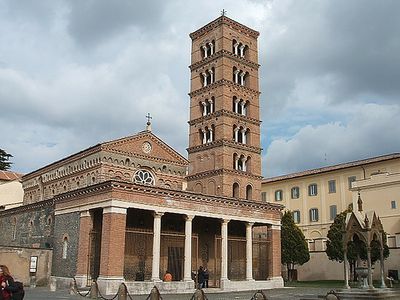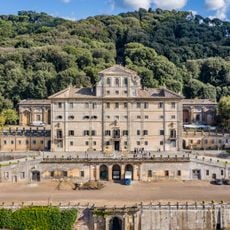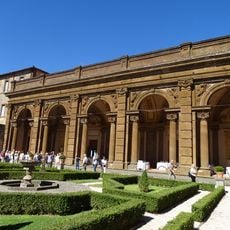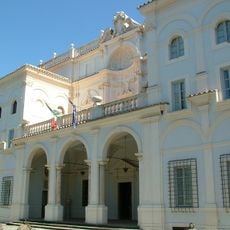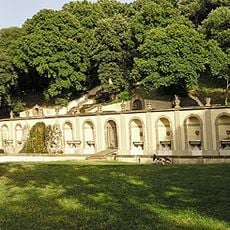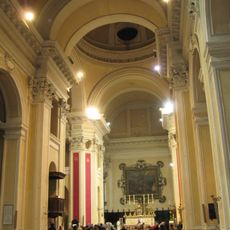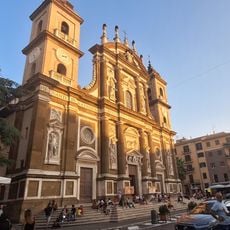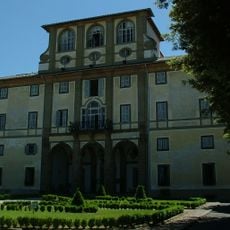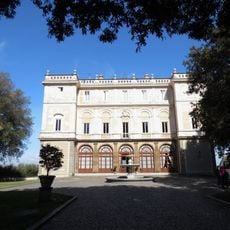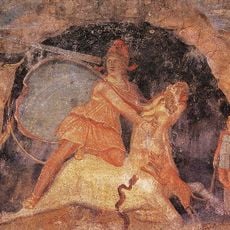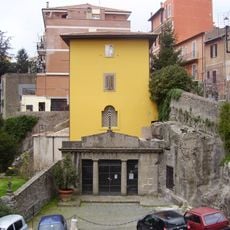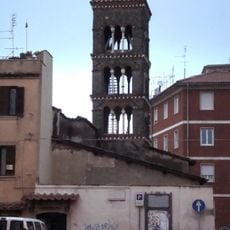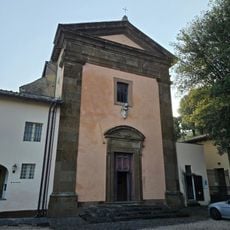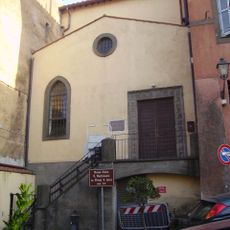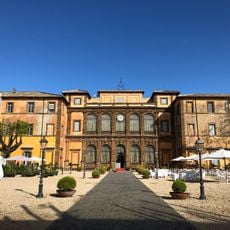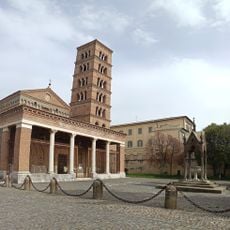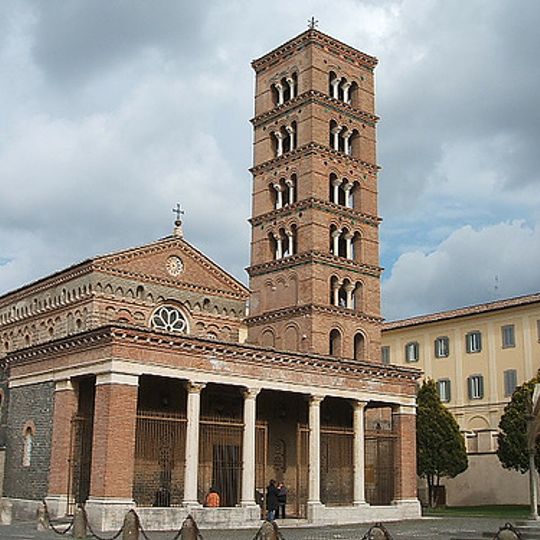
Cathedral of Grottaferrata, Territorial abbey in Grottaferrata, Italy.
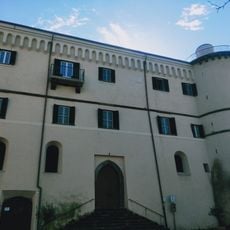
The Cathedral of Grottaferrata, also known as the Abbey of Santa Maria, is a Benedictine monastery built into the Alban Hills, combining early Christian, Romanesque, Byzantine, and Baroque elements in its stone structure. The complex is enclosed by a thick defensive wall that gives it the look of a small fortified compound rather than a conventional church.
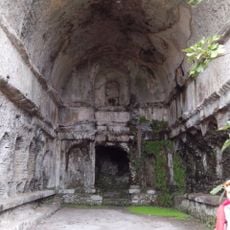
A Greek monk named Nilus of Rossano founded this monastery in the early 11th century, building partly on the ruins of an ancient Roman villa in the Tusculan hills. Over the following centuries, each period left its own layer on the structure, from medieval fortifications to Baroque interior decorations.
The monks here still celebrate Mass in Greek, following the Byzantine rite, which feels very different from a standard Catholic service. Visitors who attend a service can hear chants and see gestures that belong to an eastern Christian tradition rarely found in Italy.
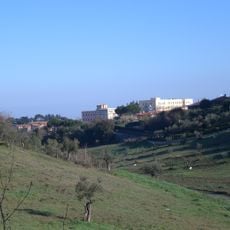
The monastery sits in the Alban Hills and is reachable from Rome by regional train or bus, making it a straightforward day trip. Visitors should cover their shoulders and knees before entering, and some areas may be closed during services, so arriving outside prayer times gives more access.
This monastery is the only surviving institution of Italo-Greek monasticism, a form of Christian life that developed in southern Italy after the eastern and western churches grew apart. The monks belong to the Benedictine order but follow the Byzantine rite, which is a rare combination found almost nowhere else.
The community of curious travelers
AroundUs brings together thousands of curated places, local tips, and hidden gems, enriched daily by 91,654 contributors worldwide.