Palazzo Pfanner, Baroque palace in Lucca, Italy
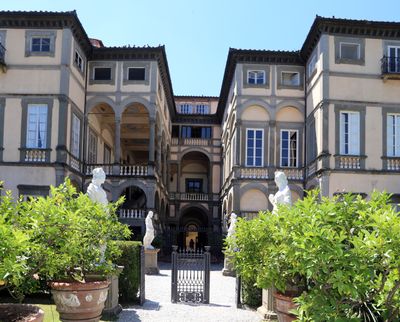
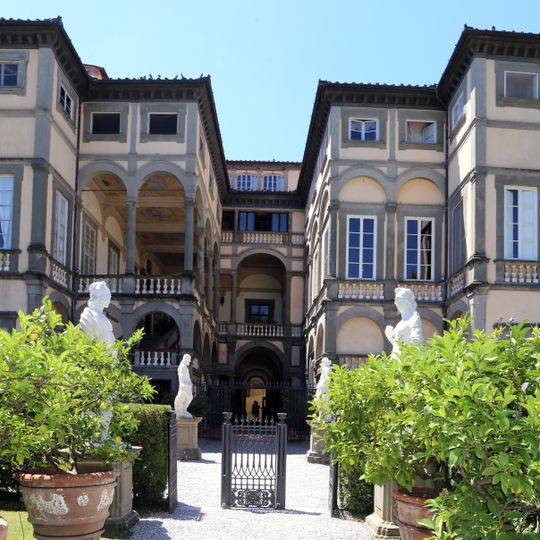
Palazzo Pfanner is a three-storey Baroque palace on Lucca's city walls, with a recessed central courtyard between two wings. Each wing has tall arched loggias with balustrades on the ground and middle levels, and rectangular windows above; a wrought-iron gate flanked by white statues opens onto the courtyard. Behind the palace lies a terraced garden divided into seven rectangular plots by straight paths, with an octagonal basin and statues of the four elements.
Palazzo Pfanner was begun in 1660 for the Moriconi, a family of Lucchese merchants who went bankrupt and sold it to the silk merchants Controni in 1680. The Controni added the monumental staircase around 1686, probably designed by Domenico Martinelli, and in 1692 hosted Prince Frederick of Denmark. Felix Pfanner, born in Hörbranz in 1818, installed the duchy's first brewery here from 1846 and gradually bought the whole building; the brewery closed in 1929.
The palace takes its name from Felix Pfanner, a brewer from Hörbranz in Austria who installed the first brewery in the Duchy of Lucca here in 1846. Its garden became a meeting place for Lucchese and international visitors to taste beer; the brewery closed in 1929. The Pfanner family still owns the palace and began restoration in 1995.
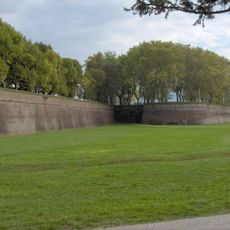
The entrance is at via degli Asili 33, on the edge of Lucca's walls. The visitable residence and the garden are separate parts of the complex, so allow time for both. The garden lies between the palace to the south and the city walls to the north, with a paved area and four terracotta pots of cycads marking the way in.
The medical collection was assembled by Pietro Pfanner (1864–1935), a surgeon and philanthropist who served as mayor of Lucca from 1920 to 1922, not by the palace's earlier noble owners. It holds surgical instruments and old medical texts displayed in the residence.
The community of curious travelers
AroundUs brings together thousands of curated places, local tips, and hidden gems, enriched daily by 93,378 contributors worldwide.