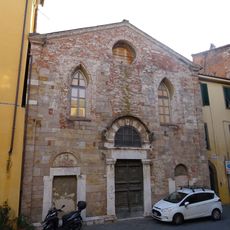
Santa Maria Corteorlandini, Lucca, Romanesque church in Lucca, Italy
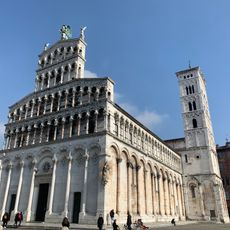
Santa Maria Corteorlandini is a church in Lucca that blends Romanesque, Baroque, and Renaissance architectural styles throughout its structure. Its interior holds numerous artworks including silver and lapis lazuli tabernacles, painted ceilings, and frescoes created across different artistic periods.
A church existed here by 1099, built between the 9th and 10th centuries for the Rolandinghi family and rebuilt in 1188; two minor apses and a right flank portal with a vegetal frieze and two lions survive from that Romanesque phase. In 1580 the Clerics Regular of the Mother of God took possession on 31 December and began convent works: the wooden choir was demolished in 1583 and rebuilt above the main door, and in 1600 a column cracked after Christmas Mass, prompting replacement of the pillars with Carrara marble columns by 1604.
The church became known locally as Santa Maria Nera for centuries because it holds an exact replica of the Holy House of Loreto. This feature made the place an important pilgrimage destination for people in the region.
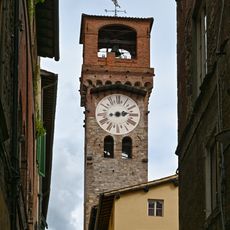
The brick bell tower dating to the 14th century stands prominently beside the main building and serves as a clear landmark for orientation. The church is centrally located in Lucca and can be easily reached on foot.
The church is also called Santa Maria Nera after the image of the Madonna di Loreto kept there. In 1602 the first two columns were replaced with Carrara marble, and medals and other memorials were placed at their bases; the remaining six were ordered the same year.
The community of curious travelers
AroundUs brings together thousands of curated places, local tips, and hidden gems, enriched daily by 93,029 contributors worldwide.