Palazzo Bernocchi, Architectural ensemble in Milan, Italy
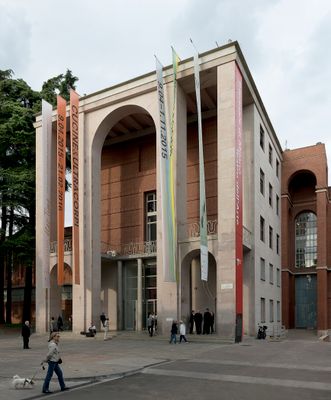
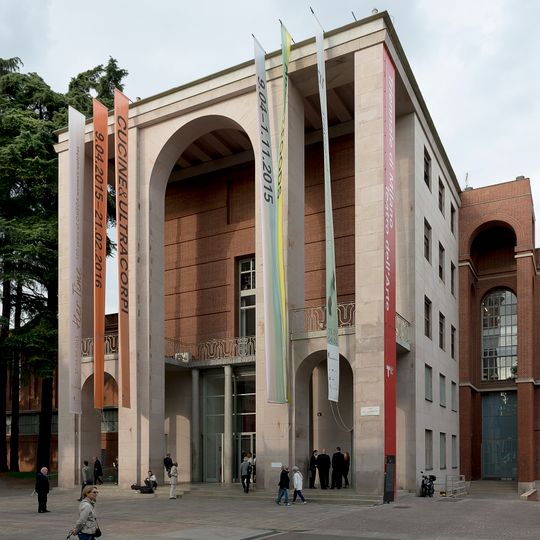
Palazzo dell'Arte Bernocchi is an architectural ensemble on three levels with a basilica-style layout and large arches of pink Baveno granite framing the entrance. Natural light fills the interior through glass-brick ceiling elements, creating bright spaces designed for exhibitions and cultural events.
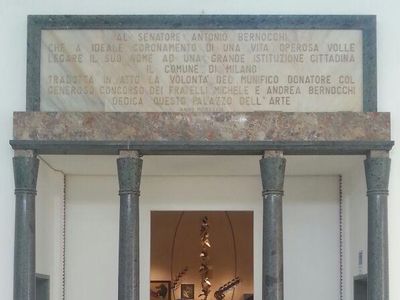
Antonio Bernocchi, a textile industrialist and senator, left the city of Milan five million lire for an arts palace, but he died in 1930, before construction began. The Fondazione Bernocchi entrusted the design to Giovanni Muzio; the first stone was laid on 28 October 1931 and the building was inaugurated on 10 May 1933 for the fifth Triennale, the first held in Milan. The Bernocchi family later ceded the palace to the city.
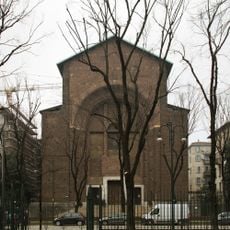
The building shows the Novecento Italiano style by combining classical elements with modern materials that were innovative for its time. The first use of Klinker tiles in Italy appears here and remains a notable feature of its exterior.
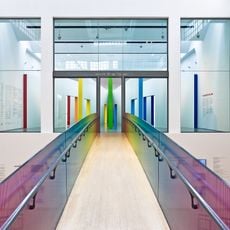
The main entrance is on viale Alemagna, on the south-west edge of Parco Sempione, a short walk from Cadorna station. The building is divided into five structurally independent sections by expansion joints, so exhibitions can be visited in stages. The 1,500 m² Galleria della Triennale on the ground floor holds temporary shows, while the Museo del Design Italiano is on the first floor, reached from the atrium by a 14-metre suspended footbridge over the grand staircase.
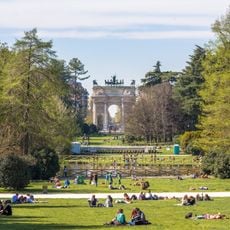
A semicircular terrace surfaced in green Cipolin marble connects to the main building through a portico. From this terrace, views of the neighboring Sempione Park become visible.
The community of curious travelers
AroundUs brings together thousands of curated places, local tips, and hidden gems, enriched daily by 93,400 contributors worldwide.