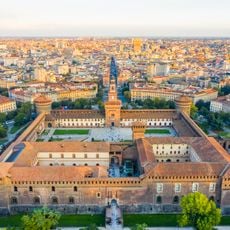
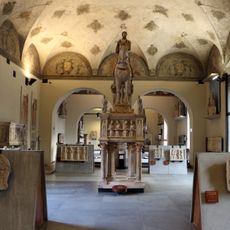
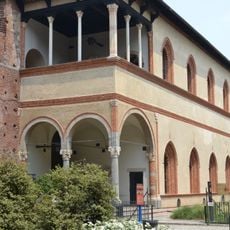
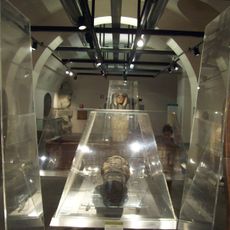
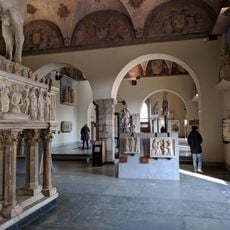
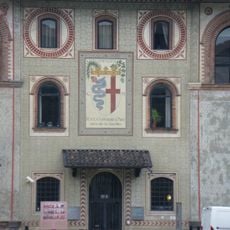
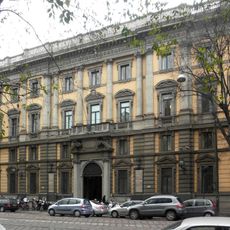
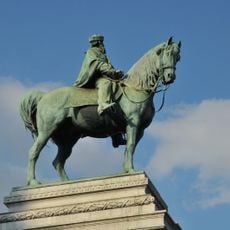
Raccolte extraeuropee del Castello Sforzesco, Ethnographic and art museum in Castello Sforzesco, Milan, Italy.
The Raccolte extraeuropee are the non-European holdings of the Castello Sforzesco's artistic collections, owned by the City of Milan and numbering over 8,000 objects. They range from pre-Columbian Peru (1200–200 BC) to the early 20th century, with pieces from the Middle and Far East, South and Central America, West and Central Africa, Southeast Asia and Oceania. Since 2015 they have been housed in the city's Museo delle Culture.
The core of the collection formed from Milanese civic holdings: the Museo Artistico Municipale, founded in 1878 after the 1874 industrial art exhibition, and the Museo Patrio Archeologico, opened at Brera in 1867. In 1900 the city moved both to the Castello Sforzesco as its civic museums. After the August 1943 bombings the pieces stayed in storage for lack of space, and since 2015 they have been held at Milan's Museo delle Culture.
The objects came to Milan through missionaries, travellers and collectors: the Turati collection, about 1,000 pieces gathered over ten years in China, Japan, Australia, Africa and Russia, was donated in 1920, three years after his death. Carlo Giussani, who lived in Yokohama from the late 1860s to 1902 as a silk inspector, gave his own in 1908.
The collection is easily reached on foot within the castle and exhibitions change regularly. Plan enough time to look closely at the objects and explore the different cultural traditions represented across the rooms.
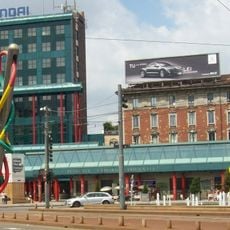
Since 2015 the collection has been housed in the Museo delle Culture (MUDEC), not in the Sforza Castle. The objects had long been kept in storage for lack of exhibition space after the August 1943 bombings. The nucleus includes about 150 ancient Chinese and Japanese bronzes bought in 1926 from the sinologist Carlo Puini.
The community of curious travelers
AroundUs brings together thousands of curated places, local tips, and hidden gems, enriched daily by 94,674 contributors worldwide.