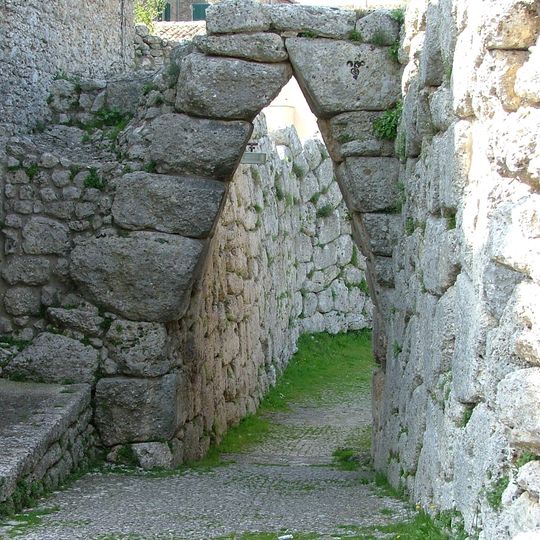
Acropolis of Arpino, Archaeological site in Arpino, Italy.
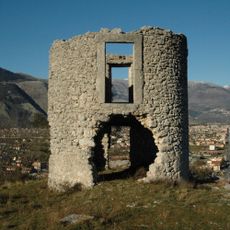
The Acropolis of Arpino is an ancient hilltop fortress surrounded by thick stone walls that encircle the settlement. The site preserves remains from different periods and offers wide views across the surrounding countryside.
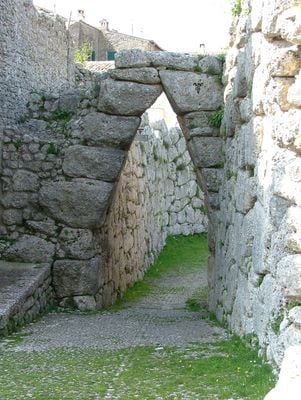
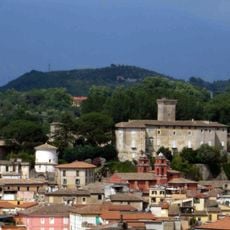
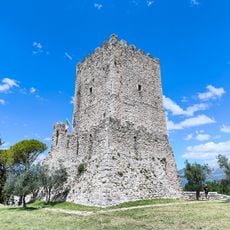
The polygonal walls of the Civitavecchia date to the Early Iron Age, around the 8th–7th century BC, and belong to the second manner on Giuseppe Lugli's classification scale. The circuit, over three kilometres long, also enclosed the Civita Falconara and the ground between the two heights. Modern-era bastions were added around the 15th–16th century, and the Torre di Cicerone was restored in 2011.
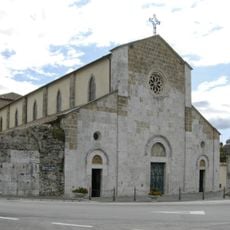
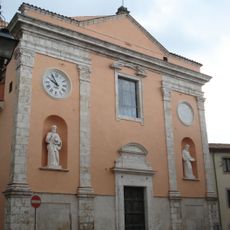
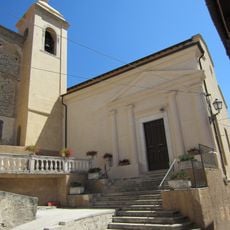
The name Civitavecchia, or C'tavecchia in the Arpino dialect, sets the acropolis apart from the Civita Falconara, the higher quarter of the historic centre. About a hundred people still live inside the walls, some working in crafts and farming, and the borgo has no shops. The small Church of the Santissima Trinità, built in 1720 against the pointed arch, is the only Greek-cross church in Arpino.
You reach the site on foot along paths that climb toward the summit, where the views are widest. Wear sturdy shoes since the ground is uneven and some stretches are steep.
The entrance features a pointed stone archway built using a technique seen at famous sites like Mycenae in Greece. This suggests that ancient peoples in different regions developed similar building methods, possibly through contact or shared knowledge.
The community of curious travelers
AroundUs brings together thousands of curated places, local tips, and hidden gems, enriched daily by 93,361 contributors worldwide.