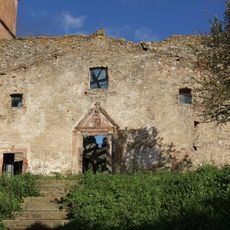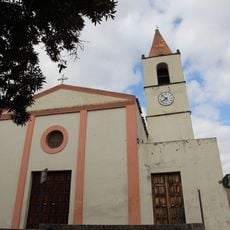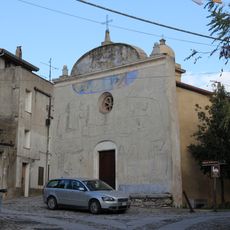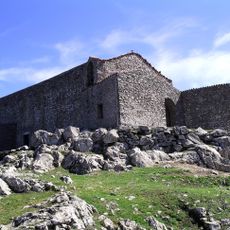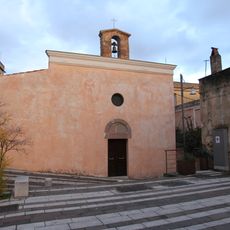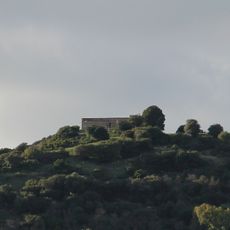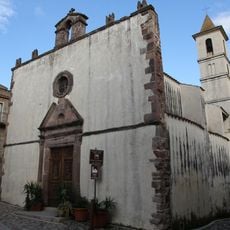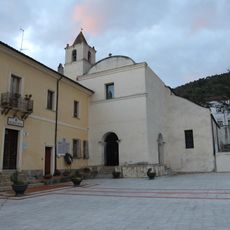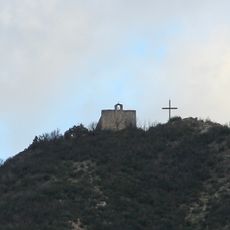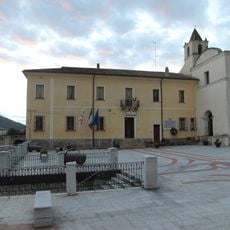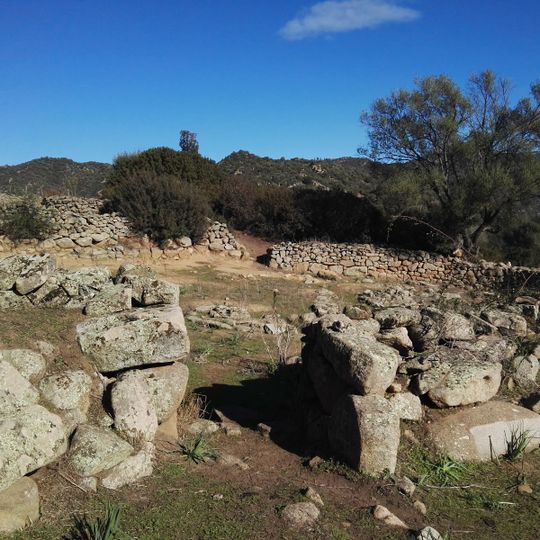
Abini nuragic sanctuary, Archaeological site in Teti, Italy.
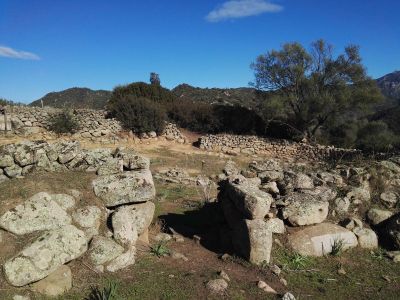
The Abini complex in Teti is split into a walled sacred enclosure holding a well shrine and, outside it, the nuragic village. The temenos still keeps some stone seats for pilgrims, and inside stand altars, priests' huts and foundations. Basalt and trachyte blocks lying at the centre belonged to the well's decorative top.
A boy's recurring dreams in September 1865 led farmers to dig at Sa Badde de sa Bidda, uncovering a deposit of bronze votives in a stone cist. In 1878 another 108-kilogram hoard of bronzes was found in a terracotta vessel. Filippo Vivanet identified the sacred enclosure, and Antonio Taramelli and Ettore Pais excavated it between 1929 and 1931.
People gathered here to perform rituals centered on water and left behind bronze figurines and religious objects as offerings. These finds reveal how spiritual practices shaped community life in ancient times.
The site lies near the Talaro river north of Teti, in the province of Nuoro; the sanctuary and the village are two separate zones, the sacred enclosure with its well and the settlement outside it. Excavations in 2000–2002 were the most recent, so some structures may be covered or fenced. The ground is uneven and the well is in poor condition.
The best-known bronze from Abini is the so-called Demon of Teti, a figure with four arms and four eyes, made between the 10th and 7th centuries BC. It is kept in the National Archaeological Museum of Cagliari, together with votive swords decorated with long-horned deer and an archer fixed to a hilt.
The community of curious travelers
AroundUs brings together thousands of curated places, local tips, and hidden gems, enriched daily by 94,692 contributors worldwide.